The 10 Most Cross-Shopped Electric Cars in Europe in 2025
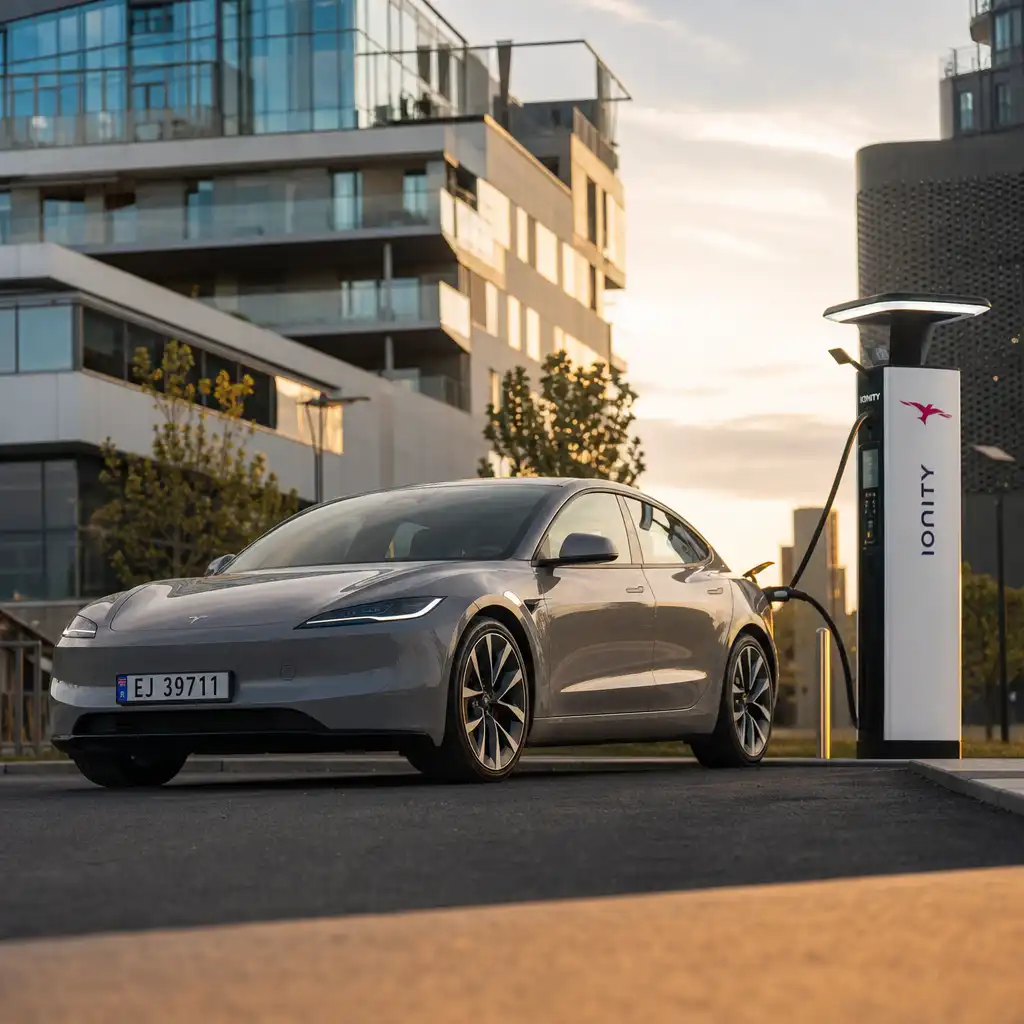
More than 1.88 million battery-electric cars were registered across the EU in 2025 — a 17.4% market share, up from 13.6% in 2024, according to the European Automobile Manufacturers' Association (ACEA). In the UK specifically, 473,348 BEVs were registered in 2025, a 23.4% market share, per the SMMT. But comparison data reveals something the registration headlines don't: buyers aren't just hunting for the best-selling EV, they're looking for the one that survives a direct comparison against its petrol or diesel equivalent. This article breaks down which electric cars are most cross-shopped in Europe, what patterns emerge when buyers compare them model-for-model against an ICE rival, and what that means if you're about to make a buying decision.
Table of contents
- Key takeaways
- Why comparisons matter more than sales
- EV Europe ranking 2025: the 10 most cross-shopped
- What the data shows when EVs are compared with ICE cars
- Head to head: the three most-analysed EVs
- Common mistakes when comparing electric cars
- FAQ
- References
Key takeaways
| Key fact | Explanation |
|---|---|
| Tesla Model Y leads all comparisons | It's the most cross-shopped EV against petrol/hybrid SUVs like the VW Tiguan and Toyota RAV4 across European platforms. |
| Total cost of ownership decides the choice | Most buyers comparing EV with ICE base their decision on multi-year TCO, not the sticker price. |
| Real-world range beats the WLTP figure as a deciding factor | Buyers compare WLTP range against real-world range reported by owners, which can differ by 20–35%, especially in winter. |
| The Volkswagen ID.4 wins in the family segment | It's one of the most cross-shopped EVs in Germany, France and Spain simultaneously — though one widely cited 4-year cost comparison found the petrol Tiguan can actually work out cheaper overall once depreciation and insurance are factored in. |
| Chinese brands are climbing the rankings, with caveats | BYD and MG win price comparisons, but the UK's new Electric Car Grant (from July 2025) explicitly excludes BYD, and MG's UK pricing sits well below its EU pricing due to EU tariffs that don't apply in Britain. |
| Fast charging is a key differentiator | In EV-vs-EV comparisons, DC charging speed weighs almost as heavily as range itself. |
| Wise EV compares EVs against same-segment ICE cars | Unlike generalist platforms, Wise EV only includes ICE vehicles built after 2019, for fair, current comparisons. |
Why comparisons matter more than sales
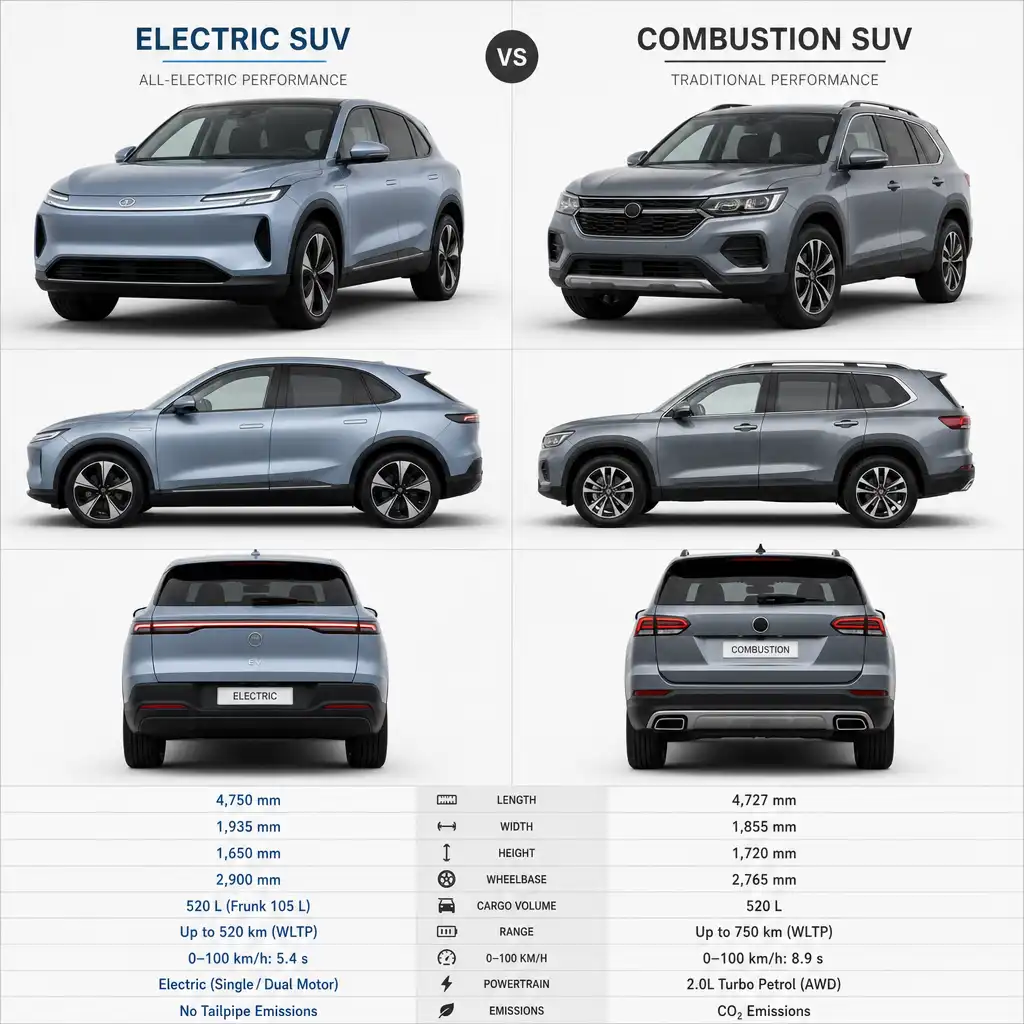
Sales figures show popularity, not reasoning. When a buyer opens a vehicle comparison platform, they're running a very different analytical process from an impulse purchase. Behavioural data from platforms like Wise EV shows that users compare an EV against at least two combustion vehicles before deciding, which makes the comparison pattern more revealing than the registration league table.
The EV Europe ranking 2025 isn't built purely on who sells the most, but on which models generate the most active questions from real consumers. An EV that keeps reappearing in comparisons has made it onto the buyer's mental shortlist — the step that comes right before conversion.
In practice, the most-compared cars tend to be the ones with the hardest case to make: a higher entry price, charging infrastructure perceived as limiting, or a segment where the equivalent ICE has a well-established reliability reputation. Comparison analysis surfaces the market's real hesitations.
EV Europe ranking 2025: the 10 most cross-shopped
This ranking is based on the volume of active comparisons made on specialist European platforms, cross-checked against organic Google search trends in the main markets (Germany, France, Spain, Italy, the Netherlands, and the UK). It isn't a sales ranking — it's a ranking of analytical interest.
1. Tesla Model Y
Still the most cross-shopped EV in Europe. It's routinely pitted against the Volkswagen Tiguan, the Toyota RAV4 Hybrid and the BMW X3 in family-SUV comparisons. Its Supercharger network and increasingly predictable depreciation are the factors that weigh most in its favour — and UK pricing has fallen meaningfully with the newer Long Range RWD variant, priced from roughly £45,000.
2. Volkswagen ID.4
The reference EV for the European buyer coming from the compact combustion SUV segment. The most frequent comparisons pit it against VW's own Tiguan, which means Volkswagen is deliberately eating into its own market. Worth flagging: one widely cited 4-year TCO comparison found the Tiguan can end up cheaper overall due to the ID.4's depreciation and insurance costs — a detail serious comparisons shouldn't skip.
3. Peugeot e-208
The most cross-shopped urban EV in southern Europe. In Spain and France, it's compared en masse to the petrol Peugeot 208, making it a near-perfect same-model EV-vs-ICE exercise. The purchase price gap remains the main sticking point in comparisons, and UK owner forums report a steep drop in real-world winter range versus the WLTP figure.
4. Renault Megane E-Tech
Has gained ground thanks to a larger LFP battery and faster charging. Comparisons pit it mainly against the Volkswagen Golf and the Seat Leon, two icons of the European compact segment — UK buyers frequently note the gap between the claimed WLTP range and real-world motorway figures.
5. Hyundai IONIQ 6
The most cross-shopped model in the accessible premium saloon segment. Its 800V architecture and rapid charging above 300 kW is the technical argument that shows up most often in comparisons against the BMW 3 Series and Audi A4/A5. One UK-specific quirk worth flagging: unlike some EU markets, the UK doesn't sell a distinct cheaper "Standard Range" trim — all UK cars use the larger long-range battery, so buyers translating a continental comparison need to adjust their price expectations.
6. BYD Atto 3
A well-established Chinese entry in Europe's top 10 comparisons. Analysis shows it's mainly compared on price against the Volkswagen ID.4 and Skoda Karoq. The most repeated question is still about the UK/European service network — and BYD is explicitly excluded from the UK's Electric Car Grant, which makes its already competitive pricing (from around £37,700) even more notable in comparisons.
7. MG4 Electric
The MG4 keeps entering comparisons at an unusual pace. Its competitive entry price makes it the most cross-shopped EV against mid-range combustion cars like the Ford Focus, and What Car? has explicitly framed it as "an EV heir to the Ford Focus." MG is the dominant value-EV brand in the UK specifically — worth noting that identical MG4 specs cost considerably more on the continent, where SAIC faces a 35.3% EU tariff that doesn't apply to UK sales.
8. Kia EV6
Holds a solid position thanks to its versatility: it appears in both family and sportier comparisons. UK reviewers generally cross-shop it against other EVs and crossovers (Ioniq 5, Tesla Model Y, Cupra Tavascan) rather than ICE saloons, which is a useful distinction if you're translating a continental "EV vs BMW 3 Series" comparison directly.
9. Skoda Enyaq iV
The most cross-shopped EV in Central and Eastern European markets, and one of the most frequently compared 1:1 with the ID.4 given the shared platform. Comparisons reveal its main rival isn't another EV at all, but the petrol Skoda Kodiaq. Buyers of this model show the most long-term-savings-oriented profile in the whole ranking.
10. BMW iX1
The only premium EV with meaningful volume in the top 10. It's frequently compared against the petrol BMW X1 and the Mercedes GLA. UK data shows buyers comparing the iX1 take longer to decide, suggesting the badge argument alone doesn't close the sale in the premium segment once the EV-vs-ICE price differential is on the table — especially since most iX1 trims now sit above £40,000 and attract the Expensive Car Supplement on top of standard VED.
What the data shows when EVs are compared with ICE cars
The patterns emerging from active comparison analysis aren't random. Three variables consistently show up as decisive, regardless of segment or market: multi-year total cost of ownership, real-world range in winter conditions, and the availability of fast charging on the buyer's regular routes.
"European consumers don't buy electric cars out of environmental conscience. They buy them when the numbers in the financial analysis line up with how they actually use the car." Sustainable Mobility Report, McKinsey Center for Future Mobility.
A frequent mistake when comparing EV with ICE is using the standard flat electricity tariff instead of an off-peak home-charging rate, which can cut the energy cost per mile substantially. UK drivers on the standard price cap pay roughly 24.7p/kWh (mid-2026), but EV-specific overnight tariffs such as Intelligent Octopus Go can fall to around 7p/kWh — a huge swing that most generalist comparison tools don't let you adjust for.
Tip: On a comparison platform like Wise EV, always set the electricity cost to your real home-charging tariff. A 5p/kWh error translates into a meaningful gap in a 5-year TCO calculation for an average European driver.
The data also shows winter range is where the EV loses the most ground in direct comparisons. Lithium-ion batteries lose between 20% and 35% of effective range at temperatures below 5°C, according to UK owner forums (SpeakEV, Tesla Owners Online). Models with a standard heat pump, such as the Tesla Model Y, cut that penalty noticeably.
Head to head: the three most-analysed EVs
The table below summarises the three EVs with the highest volume of active comparisons in Europe during 2025-2026, assessed on the dimensions that carry the most weight in real buying decisions. Prices are a market snapshot — Tesla, VW and Hyundai all adjust their line-ups frequently — so use this as a reference point and check the current price before you buy.
| Comparison criterion | Tesla Model Y (Long Range) | Volkswagen ID.4 Pro | Hyundai IONIQ 6 |
|---|---|---|---|
| UK entry price (2026) | From around £45,000 | From £46,035 | From £46,745 |
| WLTP range | Up to 383 miles (RWD) | Up to 341-347 miles | Up to 320 miles |
| Maximum DC charging speed | Around 250 kW | 110-125 kW | Up to 350 kW (800V architecture) |
| Own charging network in Europe | Yes (Supercharger) | No (relies on public networks) | No (relies on public networks) |
| Eligible for the UK Electric Car Grant | No (priced above the £37,000 cap) | No (priced above the £37,000 cap) | No (priced above the £37,000 cap) |
| Estimated 5-year TCO vs equivalent ICE | Meaningful estimated saving | Estimated saving, somewhat lower once depreciation is factored in | Estimated saving, competitive thanks to fast charging |
Tip: Before you settle a comparison between these three models, always check fast-charger availability on your regular long-distance route. A platform like Wise EV lets you compare not just the spec sheet, but how each model fits your actual usage pattern.
Common mistakes when comparing electric cars
Comparing EV with ICE badly produces wrong conclusions that lead to bad buying decisions. The most common — and the most costly — mistake is comparing the EV's list price with the ICE's list price without applying current grants and tax incentives.
Ignoring the current UK incentive and tax landscape
The old Plug-in Car Grant ended in 2022. The UK's Electric Car Grant relaunched on 16 July 2025, offering £3,750 (Band 1, higher sustainability standard) or £1,500 (Band 2) off eligible new EVs priced at or under £37,000 — applied directly at the dealer, funded through to 2030. BYD is notably excluded. Separately, since 1 April 2025, EVs have lost their road-tax exemption: new EVs pay £10 in year one, then the standard VED rate from year two, and models priced over £40,000 also attract the Expensive Car Supplement. A comparison that ignores these updated rules will misstate the real cost gap in either direction.
Using WLTP range instead of real-world range
Real owner data from UK forums indicates effective mixed-cycle range with the climate control running sits 15-25% below the homologated WLTP figure, and up to 30-35% in cold weather for models without a heat pump. Any serious comparison has to work with real-world data, not laboratory figures.
Not comparing against the equivalent ICE in the same segment
A common mistake on generalist comparison platforms is allowing a D-segment EV to be compared with a B-segment ICE car purely because the prices are similar. That comparison isn't useful to the buyer. Wise EV solves this by limiting comparisons to vehicles in the same segment built after 2019, ensuring the technical data is genuinely comparable.
FAQ
What is the most-searched electric car in Europe in 2025?
The Tesla Model Y is the most-searched and most cross-shopped electric car in Europe in 2025-2026, both in organic search volume and in active comparisons on specialist platforms. The Volkswagen ID.4 and Peugeot e-208 follow in southern European markets.
How does the EV Europe ranking 2025 differ from the sales ranking?
The sales ranking measures how many vehicles were registered. The active-comparison ranking measures how many buyers are actively in the process of weighing an EV against alternatives. A model can sell strongly on the back of corporate fleet volume while rarely appearing in private-buyer comparisons, and vice versa. The MG4 is a clear example: it shows up heavily in comparisons without always sitting in the top 5 for absolute sales.
Which vehicle comparison platform is best for comparing EVs against petrol cars?
Platforms like Wise EV are specifically designed to compare EVs against ICE cars built after 2019, which ensures technical specifications and safety systems are genuinely comparable. Generalist platforms include data from older vehicle technology, which can distort the total cost of ownership analysis.
Is an EV's maintenance cost really lower than an ICE's?
Yes, but the gap varies by model and usage. Manufacturer and independent European study data indicates EV maintenance costs run 30-40% below an equivalent ICE over the first 5 years, mainly because it eliminates oil changes, filters and reduces brake wear thanks to regenerative braking.
Are Chinese electric cars like the BYD Atto 3 or MG4 comparable to European models on spec?
On technical specification and standard equipment, the Chinese models in Europe's top 10 often match or exceed similarly priced European equivalents. The difference lies in the service network, uncertainty over long-term depreciation, and — in the EU specifically — countervailing tariffs applied since late 2024 (17% on BYD, 35.3% on MG/SAIC, on top of the standard 10% import duty), which don't apply in the UK market. These factors belong in any serious total-cost-of-ownership comparison.
How does the European winter affect the range of the most popular EVs?
Significantly. Models without a standard heat pump can lose up to 30-35% of real-world range at temperatures below 5°C, per UK owner forum reports. Models with a heat pump (Tesla Model Y, Hyundai IONIQ 6, Renault Megane E-Tech) cut that penalty noticeably. This is especially relevant for buyers in the UK, Germany, the Netherlands and the Nordics, where winter accounts for a significant share of the driving year.
Have you compared any of these electric models before making your buying decision? Tell us which criterion mattered most in your process.
Note: This is an educational analysis, not financial advice. Figures are illustrative estimates based on 2025-2026 market data and will vary by model, region, tariff and driving profile. Verify current prices and grant eligibility before you buy.