Best EV Long Range Europe: Real-World Range for Road Trips
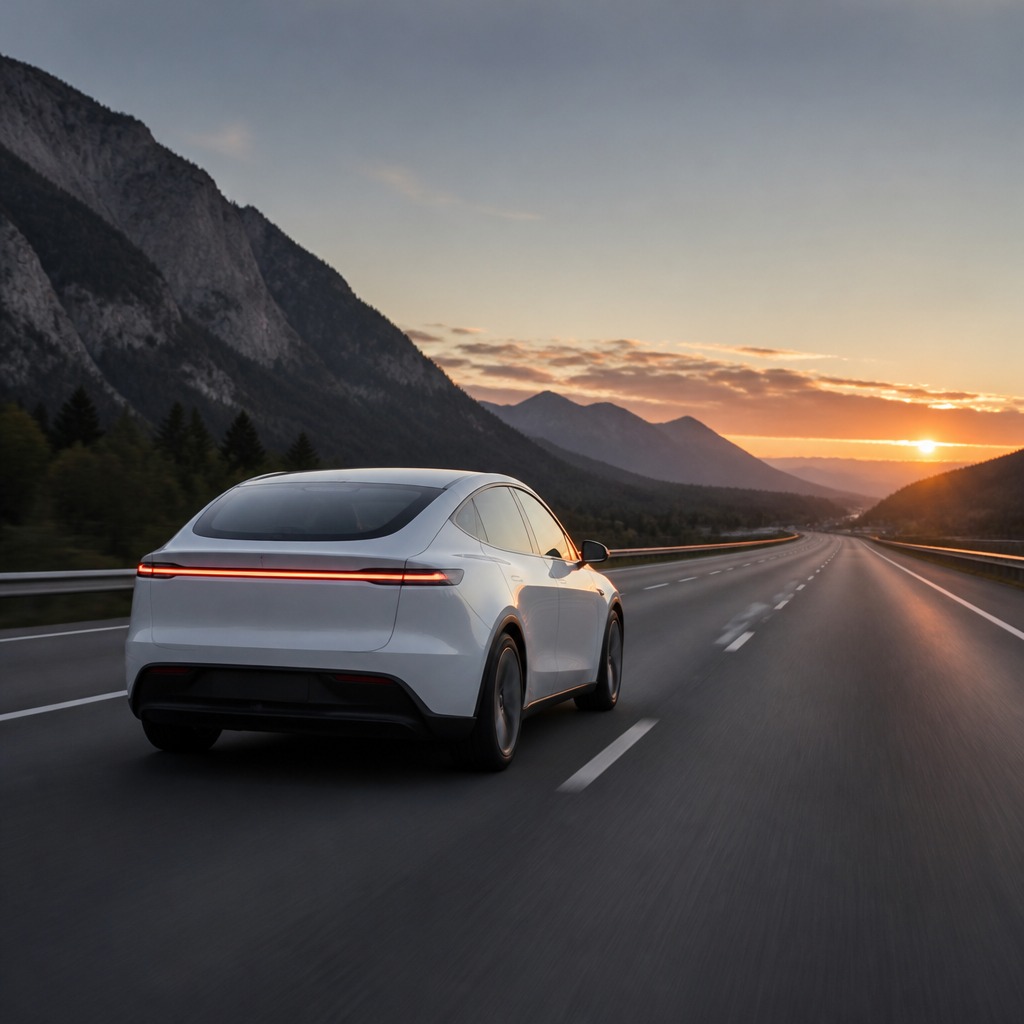
Finding the best EV long range Europe drivers can rely on starts with ignoring the headline figure. A brochure range is measured under a standardised cycle at moderate speeds and mild temperatures, and none of those conditions match a sustained motorway run in February with the cabin heater on and a full load of luggage. The gap between the two numbers is where long-distance trips succeed or fail. This article looks at what drives that gap, which drivetrain and battery trade-offs matter on European routes, and which current models are worth shortlisting for journeys across the EU and the UK.
Table of Contents
- Quick Takeaways
- Why Real-World Range Diverges from the Listed Figure
- Motorway Speed and Consumption
- Winter Losses and Cabin Heating
- The All-Wheel-Drive Range Penalty
- Long-Range Models Compared
- Charging Stop Planning on Long Routes
- Frequently Asked Questions
- References
Quick Takeaways
Key Insight
Explanation
Judge range at your cruising speed
Consumption rises steeply above typical urban speeds, so the figure that matters is the one at sustained motorway speed, not the official cycle value.
Cold weather hits both battery and cabin
Low temperatures reduce usable battery capacity and charge acceptance, while cabin heating adds a continuous load. Plan winter journeys with a clear margin.
Heat pumps matter on long winter trips
Heat pump systems generally draw less energy for cabin heating than resistive heaters. Confirm which heating system a specific trim includes before you buy.
All-wheel drive usually costs some range
Dual motors, larger batteries or heavier hardware typically reduce range, often by a modest margin, which may be worth it for alpine or winter routes.
Preconditioning shortens charging stops
Conditioning the battery before arriving at a fast charger improves charge acceptance, which keeps stops closer to the planned window.
Shortlist on measured data
Use published rankings to build a shortlist, then confirm each candidate with long-distance consumption data from owners or testers before committing.
Why Real-World Range Diverges from the Listed Figure
The official range figure comes from a standardised test cycle run under controlled conditions. It assumes moderate average speeds, stop-start driving and a battery temperature range that is comfortable for the cells. Steady motorway driving in a cold climate removes almost every one of those assumptions, which is why owners regularly report consumption above what the brochure implies.
How the on-board estimate is calculated
Most dashboards project remaining range from recent consumption, so the estimate is only as good as the last few kilometres. After a long descent or a stretch at low speed, the display can show a range that collapses once you climb a pass or meet a headwind. The estimate is therefore optimistic in some conditions and pessimistic in others, and it should be read as a trend rather than a promise.
Reading the trip computer before a long leg
Reset the average consumption counter at the start of each charging leg, not at the start of the day. A reading taken after a charge stop reflects the conditions of that leg, which is the figure to use when deciding whether the next stop is realistic. Compare the average kWh per 100 km against the usable energy you have, and keep a margin for missed exits, diversions and queues at the charger.
Pro tip: Note the usable battery capacity the car reports after a full charge, then divide it by your measured average consumption to estimate range. This gives a more defensible number than the dashboard reading at any single moment.
Motorway Speed and Consumption
Aerodynamic drag grows with the square of speed, and the power needed to overcome it grows with the cube. Raising cruising speed from 110 km/h to 130 km/h increases aerodynamic power demand by roughly two thirds, far more than the 18 percent rise in speed would suggest. On a long leg, that difference appears directly in the kWh per 100 km figure, and it often matters more than the choice between two models with similar battery sizes.
Why cruising speed matters more than battery size
A larger battery extends range only if the car uses energy efficiently at the speeds you actually drive. A large, heavy SUV with a high frontal area can consume more per kilometre on the motorway than a smaller saloon with a smaller pack. When comparing candidates, check consumption at the speed you plan to hold, because that single number decides how many kilometres a full charge delivers on your route.
Roof boxes, wheel size and payload
A roof box adds noticeable aerodynamic drag, and larger alloy wheels increase rolling resistance and reduce efficiency. Families who load the car for a holiday carry more mass and should expect a higher consumption figure than a solo driver on the same route. If long-distance range is the priority, choose the smallest wheel that suits the car and remove roof equipment when it is not needed.
Sustained motorway consumption over a full leg is a more honest figure than any single headline number on a spec sheet.
Winter Losses and Cabin Heating
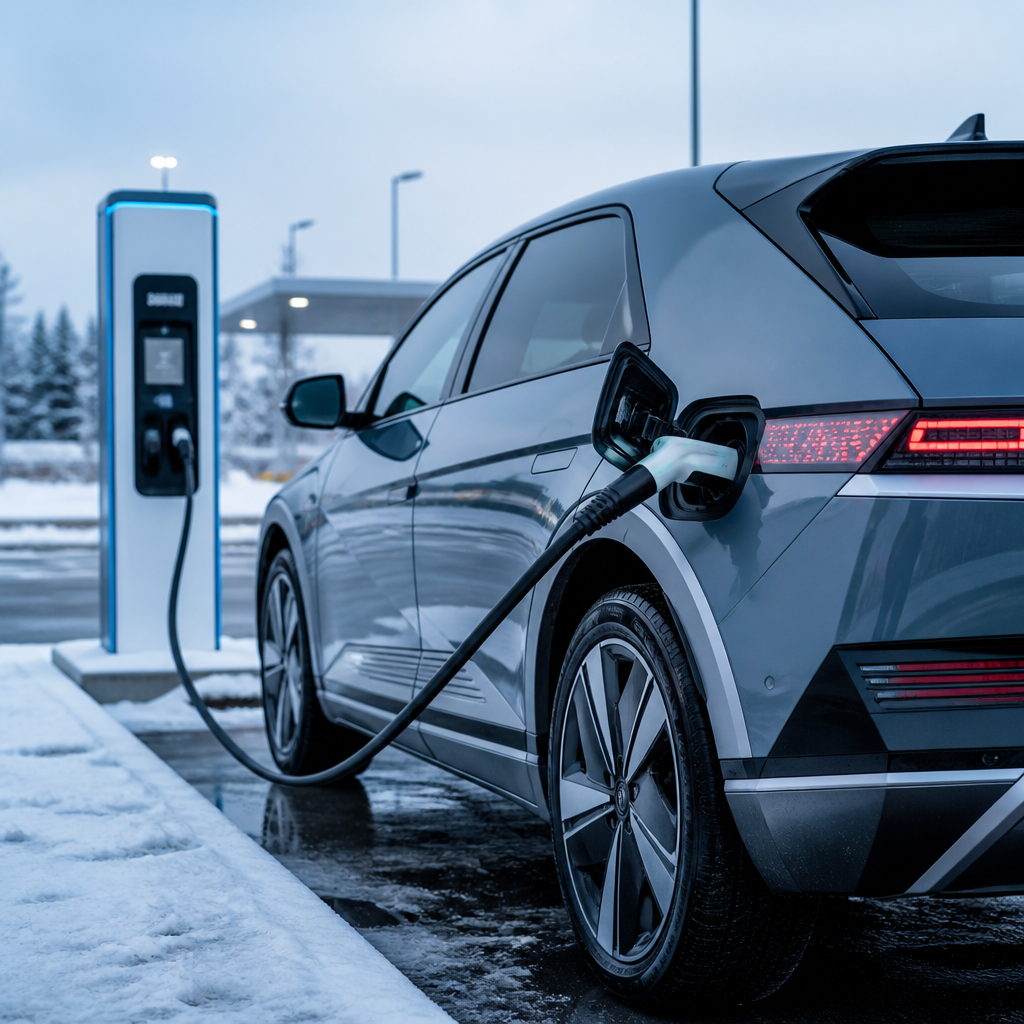
Cold batteries have higher internal resistance, which reduces usable energy on discharge and limits the power a battery can accept while charging. A car that performs well on a mild day can lose a substantial share of its effective range in deep winter, and the loss compounds when the cabin heater runs continuously. Winter is when long-distance drivers most often find their planned charging stops tighter than expected.
Heat pumps versus resistive heating
A heat pump moves heat from the outside air into the cabin, so it delivers more heat per unit of electricity than a resistive heater, which converts electricity directly into heat. The benefit is most visible on long cold drives where the heater runs for hours. Not every trim includes a heat pump, and some manufacturers offer one only as an option, so verify the heating system on the exact specification before assuming the efficiency gain.
Preconditioning and tyres in cold conditions
Preconditioning the battery and cabin while the car is still plugged in draws energy from the grid instead of the pack, which protects range at departure. Winter tyres improve traction on cold, wet and icy surfaces, but they usually carry higher rolling resistance than summer tyres, so the efficiency cost should be measured rather than assumed. Precondition at home or at a charger, then monitor consumption over the first hour of driving.
Pro tip: Set the departure time in the car's scheduling menu so the battery reaches its target temperature while still connected. This avoids drawing heating energy from the pack during the first kilometres.
The All-Wheel-Drive Range Penalty
All-wheel-drive electric cars usually carry two motors, one on each axle, and sometimes a larger battery or heavier mechanical hardware. Each addition increases mass or drivetrain losses, which reduces range compared with the equivalent two-wheel-drive version. The penalty is often modest, and for many buyers it is a reasonable price for traction on wet, icy or unpaved surfaces.
Where the penalty actually comes from
Two motors give finer traction control but add friction and inverter losses, while the extra mass increases the energy needed for acceleration and hill climbs. Manufacturers sometimes fit a larger pack to offset the effect, which can restore range but adds weight. When comparing a dual-motor variant with a single-motor version, check consumption at the same wheel size, because a wheel change can erase the efficiency difference between drivetrains.
When all-wheel drive earns its place
Electrifying's guide to all-wheel-drive EVs describes the range loss as often small, and points to peace of mind on slippery roads as the main reason buyers choose it. For European routes, that trade-off makes most sense for drivers who regularly cross alpine passes in Austria or Italy, or who face winter conditions in northern parts of the EU. If you rarely leave dry motorways, a single-motor version usually delivers more kilometres per charge for the same budget.
Long-Range Models Compared
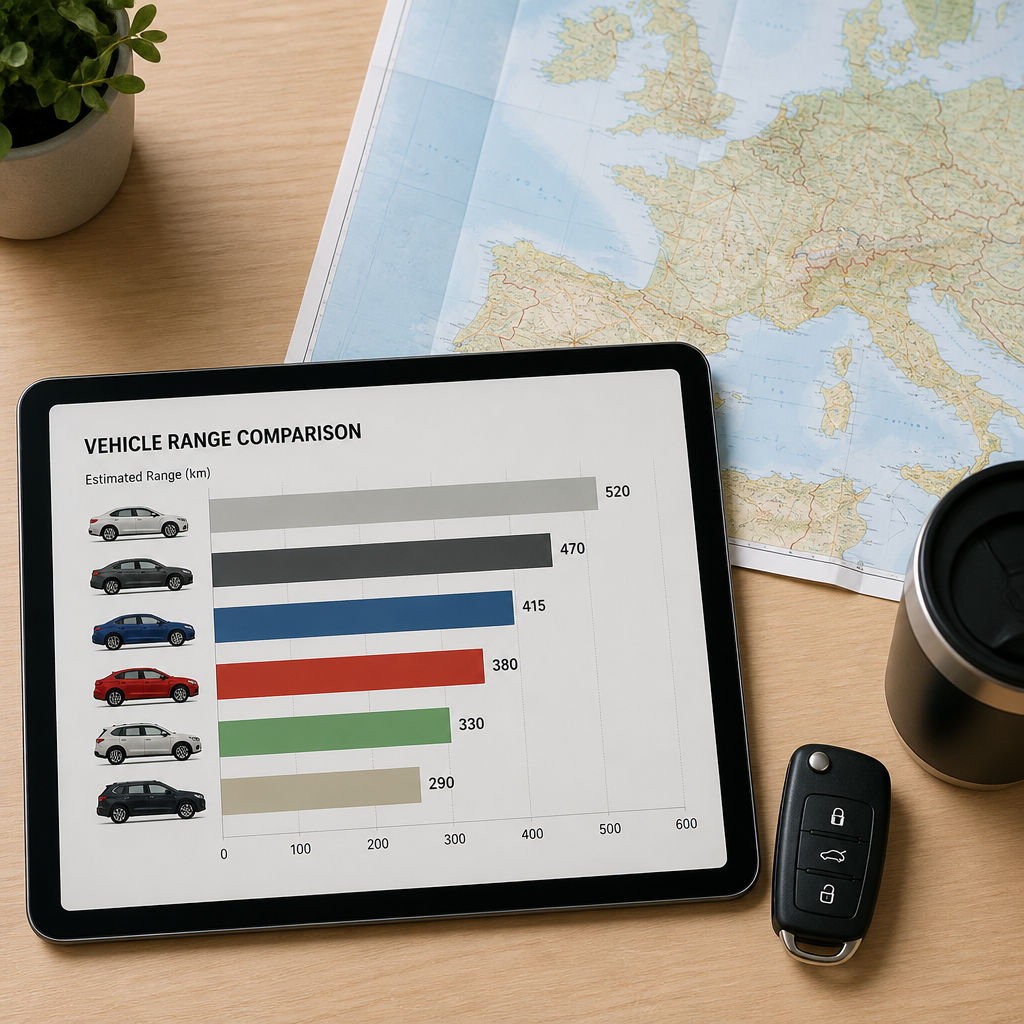
Published rankings give a useful starting point, but they rarely separate headline range from consumption under load. The three models below appear in current buyer guides, and each suits a different type of long-distance driver. Treat the comparison as a shortlist for testing rather than a final verdict.
Model
Long-distance profile
Main trade-off
Volvo EX90
TopGear describes it as smooth, quiet and easy on long journeys, with a comfortable cabin for passengers.
Large and heavy, so consumption at motorway speed depends heavily on trim and wheel choice.
Skoda Enyaq (facelifted)
TopGear reports that the facelifted version goes further than its predecessor, at a broadly similar price.
Range varies across battery and drive configurations, so the specific variant needs checking.
Volvo EX30 Twin Motor Performance Plus
Electrifying includes it among its best all-wheel-drive electric cars, with dual-motor traction.
Compact footprint and limited ground clearance, with a strong performance focus in the dual-motor version.
Interpreting the shortlist
The Volvo EX90 and the facelifted Skoda Enyaq sit in the family SUV segment, where efficiency at motorway speed depends as much on frontal area and tyres as on the battery. The EX30 is smaller and reaches all-wheel drive through a different package. Compare all three on consumption at your target speed, not on the headline figure alone.
Where a rugged electric 4x4 fits
Electrifying reports that Mercedes-Benz launched its electric G-Class in 2024, and the model is built around serious off-road capability. Its size and shape work against the efficiency that long motorway legs reward, so treat it as a specialist option rather than a benchmark for long-distance range.
Charging Stop Planning on Long Routes
A long-distance plan is only as good as its charging stops. Fast charging rates vary with state of charge, battery temperature and the charger's own output, so the time needed to reach a target depends more on the charging curve than on the peak power printed on the charger. Plan stops around the range where the battery accepts power efficiently, rather than charging until the display reads full.
Planning around the 10 to 80 percent window
Many drivers plan stops from roughly 10 percent to 80 percent, because charge acceptance usually falls sharply above that point. The exact window depends on the model, battery temperature and charger, so verify it with owner data for the car you are considering. Build each leg so that the arrival state of charge leaves a buffer for a missed exit, a queue at the charger or a detour in bad weather.
Charger power is a ceiling, not a guarantee
A charger rated at a high output will not deliver that power to every vehicle, and shared sites can split capacity between bays. Some cars also cap their own intake below the charger rating. Check the car's maximum charging rate and the output observed at the site, rather than assuming the listed power will be available when you arrive.
Pro tip: Start preconditioning while the car navigates to the charger, so the battery reaches a suitable temperature on arrival and accepts power at a higher rate from the first minute.
Frequently Asked Questions
Which EVs offer the best real-world range for long-distance driving in Europe?
No single model leads on every route, because consumption depends on speed, temperature, load and wheel size. Use current buyer rankings to build a shortlist, then compare measured consumption at motorway speed for each candidate before choosing.
How much range should I plan to lose in winter?
The loss depends on outside temperature, how long the cabin heater runs, the heating system fitted and the tyres. Measure your own consumption on the first cold drive and use that figure, plus a buffer, for planning future trips.
Is all-wheel drive worth the range penalty?
It depends on where you drive. For regular alpine routes or winter conditions, the traction can justify a modest loss of range, but if you mostly drive dry motorways, a single-motor version usually gives more kilometres per charge.
Does cruising speed matter more than battery size for long trips?
For most long-distance drivers, yes. Aerodynamic drag rises steeply with speed, so holding a slightly lower cruising speed can add more usable range than a larger battery in a less efficient car.
What should I check on the trip computer before a long drive?
Check the average consumption since your last charge, the usable battery capacity and the remaining range estimate, then compare them with the distance to the next charger. Reset the average at each stop so the figure reflects the conditions of the current leg.
Which electric car has given you the most dependable range on a long motorway trip, and how closely did its display match the consumption you measured?