How to Buy Your First Electric Car in Europe (2026 Guide)
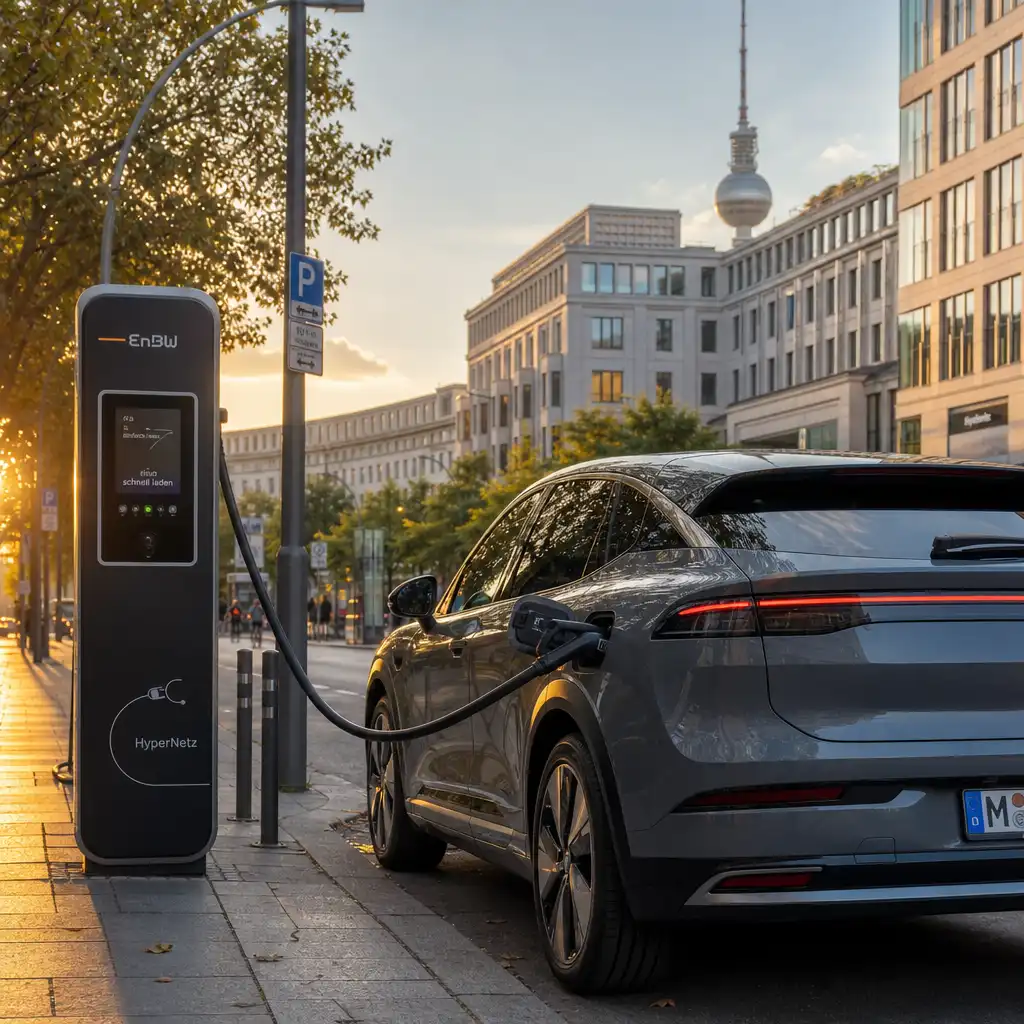
Buying your first electric car in Europe is not as simple as swapping one petrol model for another. Worries about range, charging costs, grants, and whether an EV fits your life can stall a decision that, made well, means real savings and a better drive. Battery-electric cars reached a 17.4% share of new EU registrations in 2025, up from 13.6% the year before, according to ACEA — a record, but one most first-time buyers still navigate by making the same avoidable mistakes. This guide gives you the direct answers you need.
Table of contents
- Quick summary
- Why Europe is different when buying an EV
- Types of electric vehicles: BEV, PHEV and MHEV explained
- Real range vs. official range: the most expensive mistake
- Grants and incentives across Europe by country
- Total cost of ownership: beyond the sticker price
- EV comparison platforms compared
- How to compare an EV against an equivalent petrol car
- Charging infrastructure: what to know before you sign
- Frequently asked questions
- References
Quick summary
| Key takeaway | Why it matters |
|---|---|
| WLTP range overstates by 15–25% | In real European conditions, especially in winter, true range is well below the official figure. |
| Cost per mile can be a fraction of diesel | Charging at home on an off-peak tariff, 100 km can cost under £2.50 / €2.50 versus £8–10 for an average diesel. |
| Grants vary enormously by country | The UK relaunched its Electric Car Grant (up to £3,750) in 2025; Germany brought back an income-based subsidy in 2026; France raised its bonus écologique. |
| Not all plugs are compatible | CCS Combo 2 is the European standard, but some Asian models still use CHAdeMO, whose rapid network is shrinking. |
| Comparing EV vs ICE needs different metrics | Purchase price alone misleads — servicing, road tax, and insurance can flip the decision. |
| Second owners often pay less tax | A used EV under three years old can carry similar tax breaks at a far lower entry price. |
| A good comparison tool saves weeks of research | Specialist tools like Wise EV compare an EV directly against an equivalent petrol car using up-to-date, real-world metrics. |
Why Europe is different when buying an EV
Europe is not one market. A buyer in Norway lives in one of the most mature EV ecosystems on the planet, where the large majority of new cars sold are electric. A buyer in Poland or Greece starts from far thinner charging infrastructure and more modest tax incentives. In the UK, a ZEV mandate pushes manufacturers to sell a rising share of electric cars each year, which keeps discounts and grants flowing.
The first step before shortlisting a model is to understand the specific situation in your country and region. Rapid-charger density, VAT and road-tax treatment, reduced tolls, and access to low-emission zones change the equation completely for a first EV.
In practice, buyers who research only with German or Dutch data and then buy in Spain, Italy, or rural areas get unpleasant surprises with the charging network on rural routes or with the paperwork to claim grants.
Types of electric vehicles: BEV, PHEV and MHEV explained
A common mistake is treating every electrified car as the same. They are not, and the differences matter for cost and viability.
BEV: the pure electric
A battery-electric vehicle (BEV) has no combustion engine. It has the lowest long-term maintenance cost, access to the highest grants, and zero tailpipe emissions. This is the category to focus on if you drive more than 15,000 km a year or have access to home or workplace charging.
PHEV: the plug-in hybrid
A plug-in hybrid (PHEV) combines an electric motor with a combustion engine. On paper it looks ideal for anyone unsure about range. In practice, real-world data shows many PHEV owners in Europe rarely plug them in, which turns them into heavier, pricier petrol cars. It only makes sense if you will charge daily.
MHEV: the mild hybrid
A mild hybrid (MHEV) cannot be charged externally and offers only marginal efficiency gains. It does not qualify for the main EV grants and does not meaningfully change maintenance costs versus a conventional petrol or diesel car. For a buyer who wants to make the real jump to electric, the MHEV is not a useful stepping stone.
Tip: If you live in a flat with no way to install a private charge point, first check the density of public chargers within a 2 km radius before committing to a BEV. Tools like the Wise EV map or Zapmap (UK) and PlugShare give you that in minutes.
Real range vs. official range: the most expensive mistake
The range on a spec sheet follows the WLTP cycle, a more realistic European standard than the old NEDC, but one that still overstates real range by 15–25% in everyday use. In winter, with the heating on and at motorway speeds, that gap can exceed 30%.
In practice, a car advertised at 500 km WLTP delivers roughly 350–420 km in summer and 280–350 km in winter in central-European climates. For buyers in Scandinavia or mountainous regions, the margin is larger still.
"WLTP improved transparency, but a significant gap remains between lab figures and the real world. Buyers should apply a discount of at least 20% to any official number." — Transport & Environment, real-world EV efficiency analysis.
The practical fix is to look for real range measured in real conditions. Specialist platforms like Wise EV let you compare the real range of different EVs against their petrol equivalents using up-to-date data rather than the manufacturer's marketing figure.
Tip: Never base your decision on the maximum quoted range. Always use the estimated real winter figure as your planning reference to avoid surprises on long trips.
Grants and incentives across Europe by country
Incentives are the most country-specific part of any EV decision, and they change often. All five markets we track rewrote their rules in 2026: Germany opened a new income-tested premium in May, Spain replaced MOVES III with the formula-based Plan Auto+, France moved to three income tiers, the UK shifted its expensive-car tax threshold, and Ukraine scrapped its VAT exemption on imports.
Rather than repeat those numbers here and let them go stale, we keep them current in one place: EV grants and car tax in 2026, country by country. Amounts, income limits, deadlines and the annual taxes that follow, every figure dated and sourced.
Two things worth knowing before you read it. No national scheme in any of the five markets pays anything toward a used EV. And over five years, the tax you pay each year usually matters more than the grant you collect once.
Total cost of ownership: beyond the sticker price
An EV's list price is usually higher than an equivalent petrol or diesel car, but the five-year total cost of ownership (TCO) is often equal or lower for drivers covering more than 12,000 km a year. Analysis from McKinsey puts the break-even between an EV and a comparable ICE car at three to five years in most European markets.
The factors that lower an EV's TCO are concrete: no oil changes, no timing belt, no clutch on automatics, brakes that last roughly twice as long thanks to regenerative braking, and an energy cost per kilometre two to three times lower than petrol or diesel.
The factor that raises an EV's TCO is depreciation. First-generation models, or those with batteries under 60 kWh, depreciate faster than their combustion equivalents, especially if battery technology improves substantially over the next three years.
EV comparison platforms compared
Choosing the right research tool can save weeks of work. These are the main options for European buyers and their real differences.
| Platform | Main focus | Key limitation |
|---|---|---|
| Wise EV (wise-ev.me) | Direct EV vs ICE comparison with real-world metrics — cost per km, real range, estimated TCO. Cars built from 2019. | Newest platform, catalogue still growing. |
| EV Database (ev-database.org) | Technical database of pure EVs. Strong battery-spec and charging-efficiency coverage. | Does not compare against equivalent ICE cars. No ownership-cost data or per-country grants. |
| Edmunds (edmunds.com) | US reference platform with editorial reviews and current market prices. | US-oriented. Prices, incentives, and charging specs do not apply to Europe. |
For a European buyer coming from a petrol car who wants to judge whether the jump to electric makes sense in their specific case, the advantage of a platform like Wise EV is that the EV vs ICE comparison is the centre of the product, not a secondary feature. That changes the quality of the decision.
How to compare an EV against an equivalent petrol car
The right comparison is not just about purchase price. Five variables determine the rational choice for your profile.
Usage profile: annual mileage and trip type
An urban driver covering 8,000 km a year on short trips with home charging is an ideal EV profile. A self-employed driver covering 40,000 km a year on secondary roads in areas with little rapid-charging needs a much more careful analysis before leaving diesel behind.
Access to private charging
Home or workplace charging is the single factor that most separates satisfied from dissatisfied first-time EV owners. If you can charge overnight, cost per kilometre drops sharply and daily range is never an issue. If you depend solely on public rapid charging, the cost per kWh rises and the experience gets harder.
Residual value and ownership horizon
If you plan to change cars every three or four years, EV depreciation can eat part of the operating saving. If you keep it more than five years, the EV's TCO wins clearly in almost every segment of today's European market.
Charging infrastructure: what to know before you sign
Europe passed roughly 1.14 million public charging points by the end of 2025 — more than four times the 2020 figure — but distribution is very uneven. Just three countries (the Netherlands, France, and Germany) host about 61% of all EU charge points, while parts of Eastern and Southern Europe lag far behind. That difference is decisive for daily experience.
Charging types and real speeds
Alternating current (AC) charging at home or in car parks delivers 7–22 kW. Rapid direct current (DC) charging on motorways delivers 50–350 kW. For long trips, having DC chargers of at least 100 kW on your usual routes is the minimum to avoid a frustrating experience.
The de-facto standard in Europe is the CCS Combo 2 connector, mandatory for rapid charging at all new public charge points under the EU's AFIR regulation. If a model you like uses CHAdeMO (some Nissan and Mitsubishi), check that the compatible-charger network on your usual routes is sufficient, because its expansion has stalled.
Installing a home charger
In practice, installing a 7.4 kW home wallbox costs roughly £500–1,200 / €500–1,200 in most European countries, fitting included. Several countries fold this into EV grant programmes. Do not wait until you buy the car to look into it: some flat blocks and leaseholds have restrictions that can delay installation by months.
Frequently asked questions
How much does it really cost to charge an EV in Europe?
It depends on country and charging type. At home on an overnight tariff, the cost is roughly £0.07–0.14 / €0.10–0.14 per kWh, or about £1.80–2.50 / €1.80–2.50 per 100 km. On 150 kW public rapid charging, prices can rise to €0.45–0.70 per kWh depending on the operator, lifting the cost per 100 km to €8–12 — similar to or above diesel. The key is not to depend solely on public charging.
Is it safe to buy a used EV as a first electric car?
Yes, with conditions. The critical point is battery health. Always demand a battery health (BMS) report showing current capacity versus original. An EV below 80% of original capacity has significantly reduced real range. Models like the Renault Zoe, second-generation Nissan Leaf, and Tesla Model 3 have wide degradation-data coverage to verify against.
Do I need to change my insurance when switching to an EV?
Your current policy does not automatically cover a different vehicle. You must notify your insurer. The premium can change because EV repair costs are, on average, 10–25% higher than equivalent ICE cars due to pricier electronic parts. Some insurers offer EV-specific discounts in markets where electric penetration is higher.
What minimum range do I need for daily urban use in Europe?
For purely urban use with overnight home charging, 200 km of real range is more than enough for 95% of drivers. The average European drives under 40 km a day in town. Range anxiety disappears once you have a home or workplace charge point and accept that you leave each morning at 80%.
Is the advice different if I live in a rural area?
Yes, significantly. In rural areas with sparse public charging, dependence on home charging is total. You need an adequate home electrical installation and at least 300 km of real range to reach cities with full confidence. Here, a PHEV can make more sense than a BEV if long trips are frequent and there is no reliable charging on your usual routes.
How long does an EV battery last?
Data from the first mass-market models shows real degradation is lower than feared. A Tesla Model 3, Renault Zoe, or Hyundai Kona Electric with more than 150,000 km shows, on average, under 10% capacity loss if charged reasonably. Manufacturers in Europe warrant at least 70% of original capacity for 8 years or 160,000 km on most current BEVs.
Have you already chosen your first electric car, or are you still weighing options? Share your experience or your main doubts in the comments to help other first-time buyers.
References
- International Energy Agency — global and European EV adoption data
- ACEA — European new-car registration and market-share data
- McKinsey — total cost of ownership analysis, EV vs ICE in Europe
- International Council on Clean Transportation — real-world efficiency of electrified vehicles
- Transport & Environment — real-world range and emissions of EVs in Europe
- UK Government — Electric Car Grant