EV Charging Cost in Europe: Country Comparison 2026
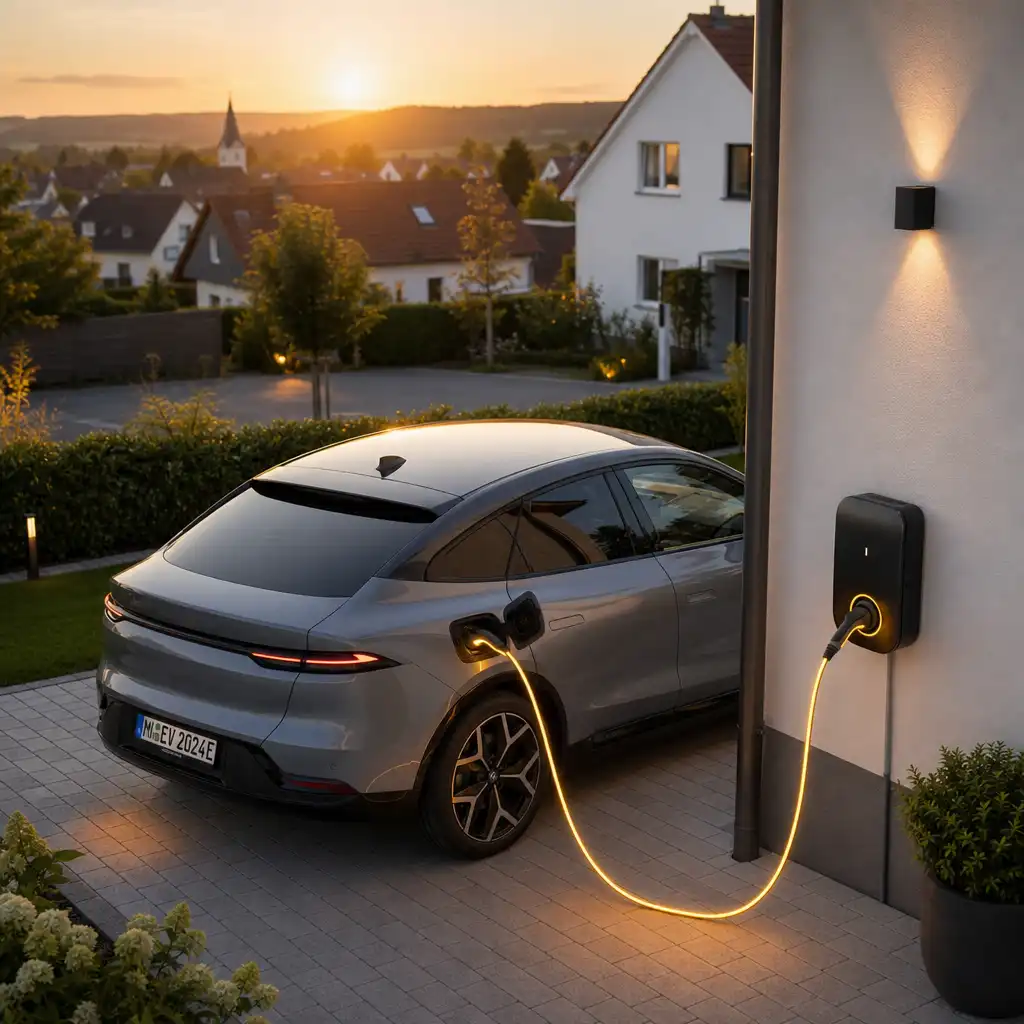
Charging an electric car in Europe does not cost the same in Berlin as it does in London, and that gap can run to hundreds of pounds a year. The EV charging cost across Europe varies by up to 400 percent between countries, depending on the energy mix, taxes and available infrastructure. Whether you are weighing the switch to electric or have already made it, knowing exactly what you pay per mile is as important as knowing the range. This guide breaks down the real numbers, country by country, so you decide with hard data in hand.
Contents
- Quick summary: the essentials
- Home electricity price by country
- Charging at home vs a public charge point
- How much does charging cost by model?
- Comparison of charging methods in Europe
- Common mistakes when calculating the real cost
- Frequently asked questions
- References
Quick summary: the essentials
| Key point | Explanation |
|---|---|
| The cheapest country to charge in Europe is Norway | With subsidised electricity tariffs and mainly hydropower, the home cost sits around 0.10 to 0.16 EUR/kWh. |
| The UK sits mid-table on standard rates | The Ofgem price cap for April to June 2026 is 24.67p/kWh, but dedicated EV tariffs change the picture dramatically. |
| A dedicated EV tariff is the single biggest lever in the UK | Off-peak EV tariffs such as Intelligent Octopus Go offer overnight rates around 7p/kWh, roughly a quarter of the cap rate. |
| Charging at home can cost up to 5 times less than a public rapid charger | A rapid DC charger can bill 50p to 81p/kWh against home rates. |
| Charging at home is where almost all the saving comes from | Real user data shows home charging settles at 75 to 85 percent of the total once owners pass six months. |
| Compare EV vs petrol per mile, not per charge | An EV uses about 0.24 to 0.35 kWh per mile. On an off-peak tariff that is roughly 2p to 3p per mile against 13p to 17p for a petrol car. |
| Public network rates vary even within one country | Ionity, BP Pulse and Gridserve apply different prices by membership and charging speed. |
Home electricity price by country
According to Eurostat data for the second half of 2025, the average household electricity price in the EU sat around 0.29 EUR/kWh, but that average hides huge differences. Germany and Denmark lead with prices above 0.38 EUR/kWh, while Hungary and Bulgaria stay below 0.15 EUR/kWh.
The UK is no longer in Eurostat figures, but the Ofgem price cap gives a clear reference: 24.67p/kWh for April to June 2026, with the cap reviewed quarterly. France is a special case thanks to its nuclear fleet, with home prices of roughly 0.22 to 0.27 EUR/kWh, putting French EV owners among the best placed on the continent.
Average home prices by country (2025-2026)
The figures below show the average price per kWh for households in Europe's main EV markets, referencing Eurostat, Ofgem and national consumer bodies:
- United Kingdom: 24.67p/kWh standard cap (April to June 2026); around 7p/kWh on overnight EV tariffs
- Germany: 0.35 to 0.40 EUR/kWh
- France: 0.22 to 0.27 EUR/kWh
- Spain: 0.18 to 0.24 EUR/kWh (regulated PVPC tariff)
- Netherlands: 0.26 to 0.32 EUR/kWh
- Italy: 0.25 to 0.30 EUR/kWh
- Norway: 0.10 to 0.16 EUR/kWh (outside the EU, an important reference)
- Poland: 0.16 to 0.21 EUR/kWh
In practice, the country you live in, and the tariff you choose, can matter more for fuel saving than the EV model itself. A UK driver on a 7p overnight tariff pays a fraction per mile of the same car charged on the standard cap rate.
Tip: If you are in the UK with home charging, move to a dedicated EV tariff such as Intelligent Octopus Go, EDF GoElectric or OVO Charge Anytime. Charging a 60 kWh battery overnight at around 7p/kWh costs roughly 4 pounds, against about 15 pounds at the standard cap rate.
Charging at home vs a public charge point
This is the most practical debate for any EV owner. Charging at home is, in almost every European country and for daily use, the cheapest and most convenient option. But the price gap with public points is neither uniform nor predictable.
Home charging: the wallbox as the cost-effective standard
Installing a wallbox (between 7.4 kW and 22 kW) costs roughly 800 to 1,200 pounds in the UK, including installation. That investment pays back quickly. In the UK, the EV chargepoint grant covers up to 350 pounds for flat owners and renters, and Scotland has run additional support, so check the schemes in force before buying.
In operating terms, a 7.4 kW home charger takes roughly 8 to 10 hours to fully charge a 60 to 77 kWh battery. Done overnight on an EV tariff, that costs around 4 to 6 pounds, against 25 to 50 pounds for the equivalent on a public rapid charger.
Public rapid charging: useful but pricey for daily use
Rapid DC chargers from 50 kW to 350 kW are essential for long trips, but their price per kWh is much higher. Ionity, the European premium network, charges around 81p/kWh ad hoc in the UK, dropping to about 43p/kWh on an annual plan. BP Pulse and Gridserve sit in a similar bracket, typically 59p to 79p/kWh on rapid units.
The most common mistake first-time EV buyers make is calculating the saving against petrol using only the home electricity price, without allowing for the fact that in the first months, while they learn the charging routine, they lean on public chargers more than they expected. Real user data shows the home-charging share settles at around 75 to 85 percent once the owner is six months in.
"The switch to an electric vehicle is, above all, a change of habits. 80 percent of the real saving comes from charging at home overnight. Whoever ignores that habit pays almost as much as with petrol." Based on electric mobility sector analysis.
How much does charging cost by model?
The car's real consumption, measured in kWh per mile, matters as much as the electricity price. Two EVs can cost the same at the dealer and generate completely different charging bills across the year.
Real consumption vs WLTP: the difference matters
The WLTP cycle usually shows 14 to 18 kWh per 100 km (roughly 0.23 to 0.29 kWh per mile) for compact cars. Real-world driving, especially in winter or at sustained motorway speed, pushes that to 18 to 26 kWh per 100 km (0.29 to 0.42 kWh per mile) on many models. A mid-size electric SUV like the Volkswagen ID.4 with a 77 kWh battery has a WLTP figure of 17.5 kWh per 100 km but can exceed 22 kWh per 100 km in winter.
Using those figures, the cost per 100 miles in the main markets works out as:
- UK (overnight EV tariff, 7p/kWh): about 2.60 to 4.20 pounds per 100 miles
- UK (standard cap, 24.67p/kWh): about 9.20 to 14.80 pounds per 100 miles
- Germany (home tariff, 0.38 EUR/kWh): about 11 to 18 EUR per 100 miles
- France (home tariff, 0.25 EUR/kWh): about 7.30 to 12 EUR per 100 miles
- Norway (home tariff, 0.12 EUR/kWh): about 3.50 to 5.60 EUR per 100 miles
Compared with a petrol car using 45 mpg at 1.40 pounds per litre, the cost is around 14 pounds per 100 miles. The EV advantage is clear in every European market, and overwhelming in the UK on an off-peak tariff.
To compare the running cost of a specific EV directly against its petrol or diesel equivalent, the Wise EV platform sets that comparison side by side between electric models and combustion cars built after 2019, including real consumption metrics you will not find on standard spec sheets.
Tip: Before buying an EV, work out your real monthly cost by multiplying your monthly miles by the model's consumption in kWh per mile and by your overnight tariff price. That number, not the dealer price, decides your real saving against petrol.
Comparison of charging methods in Europe
Not every charging method serves the same purpose, and picking the wrong one for your profile can cost you, literally. The table below compares the three most common scenarios for a UK and European EV driver.
| Charging method | Estimated cost per full charge (60 kWh) | Best for |
|---|---|---|
| Home wallbox overnight (EV tariff) | 4 to 12 pounds (depending on tariff and country) | Daily urban and suburban use with off-street parking |
| Public AC charger (22 kW, car park or retail) | 12 to 22 pounds | Occasional top-up when you have not charged at home |
| Public rapid DC charger (50 to 150 kW, motorway) | 30 to 49 pounds | Long-distance trips, emergency charging |
The data is consistent across European markets: drivers who charge only at home save 50 to 75 percent against those who rely on public rapid chargers. Your living situation directly shapes the real saving. A driver in a flat without off-street parking in London or Manchester will face a notably higher charging cost than someone with a driveway in a residential area.
Common mistakes when calculating the real cost
The most widespread mistake is comparing the price of a kWh of electricity directly with the price of a litre of petrol, without accounting for the efficiency of each technology. A combustion engine wastes 60 to 70 percent of the fuel energy as heat. An electric motor converts more than 90 percent of the energy into motion. So even at equal cost per unit of energy, the EV comes out ahead.
Ignoring the tariff in your electricity contract
Many EV buyers do not review their electricity contract before they start charging. Staying on a high standard-cap rate when dedicated EV tariffs exist can mean paying several times more than necessary for overnight charging. In the UK, suppliers such as Octopus Energy, OVO and EDF offer plans designed for overnight EV charging at around 7p/kWh.
Not accounting for battery degradation over the long term
Battery capacity declines with time and heavy rapid-charging use. A battery at 85 percent of its original capacity covers fewer miles per charge, meaning more charging cycles per year and a higher total cost than calculated in year one. This factor rarely appears in generic comparison tools, but it has a real impact from the fourth or fifth year of use.
On Wise EV you can compare EV and combustion models accounting for the vehicle's real specifications, which gives a firmer basis for estimating multi-year running cost than tools that only show the purchase price.
Assuming the public network is always more expensive
In some European municipalities, especially in France and the Netherlands, free or heavily reduced public charge points are funded by the council. UK supermarkets and some destinations also run low-cost or free AC charging. Not counting this possibility leads to underestimating the potential saving. The reality is varied and needs local research.
Frequently asked questions
How much does it cost to charge an electric car from empty in the UK?
With a 60 kWh battery on an overnight EV tariff around 7p/kWh, a full charge from 0 to 100 percent at home costs about 4 pounds. On the standard Ofgem cap rate of 24.67p/kWh, the cost rises to about 15 pounds. On a public rapid charger, the same process can cost 30 to 49 pounds depending on the operator and power.
Which country in Europe has the cheapest electricity to charge an EV?
Outside the EU, Norway consistently offers the lowest home prices, 0.10 to 0.16 EUR/kWh, thanks to hydropower. Within the EU, Bulgaria, Hungary and Poland have the lowest home rates, below 0.18 EUR/kWh. In the UK, a dedicated overnight EV tariff at around 7p/kWh is among the cheapest effective rates in Europe for home charging.
Is it worth installing a wallbox at home?
Yes, in almost every case. The payback period for a 7.4 kW wallbox with installation, at an average UK price of around 1,000 pounds before grants, is usually under two years for drivers covering more than 8,000 miles a year, and faster still when paired with an off-peak EV tariff. The cost of going without, relying on paid public chargers, can exceed 500 to 800 pounds a year.
How does winter affect the cost of charging an electric car?
Cold reduces battery efficiency and raises real consumption. Below freezing, consumption can rise 20 to 40 percent against the summer WLTP figure. That means more kilowatt-hours per mile and a higher cost per mile. In the UK, the milder winter keeps the impact toward the lower end, around 10 to 20 percent in colder spells.
Is it cheaper to charge at home or at supermarkets and retail parks?
It depends on the operator and country, but in most cases overnight home charging on an EV tariff stays cheapest. However, many UK supermarkets and retail parks offer free or low-cost AC charging (around 0 to 20p/kWh) as a customer service. If you have regular access and dwell time allows, these are a very cost-effective complement to home charging.
What is the difference between the home kWh price and a motorway rapid charger?
The difference is substantial, reaching 3 to 5 times more at motorway rapid chargers. In the UK, the overnight EV tariff price can be around 7p/kWh, while a 150 kW motorway charger from operators such as Ionity or Gridserve can charge 59p to 81p/kWh. That gap reflects infrastructure investment, the cost of contracted power and the operator's commercial margins.
Have you noticed significant differences in charging cost between countries or providers? Tell us your real experience in the comments: your case can help other drivers make a better-informed decision.
References
- European statistics on household electricity prices and EV markets, Statista
- Official Eurostat data on electricity prices by country in the EU
- Ofgem energy price cap rates for Great Britain
- International Energy Agency reports on EV adoption and global charging costs
- McKinsey research on charging infrastructure and consumer behaviour in Europe