EV Charging Network Europe 2026: Who's Ready?
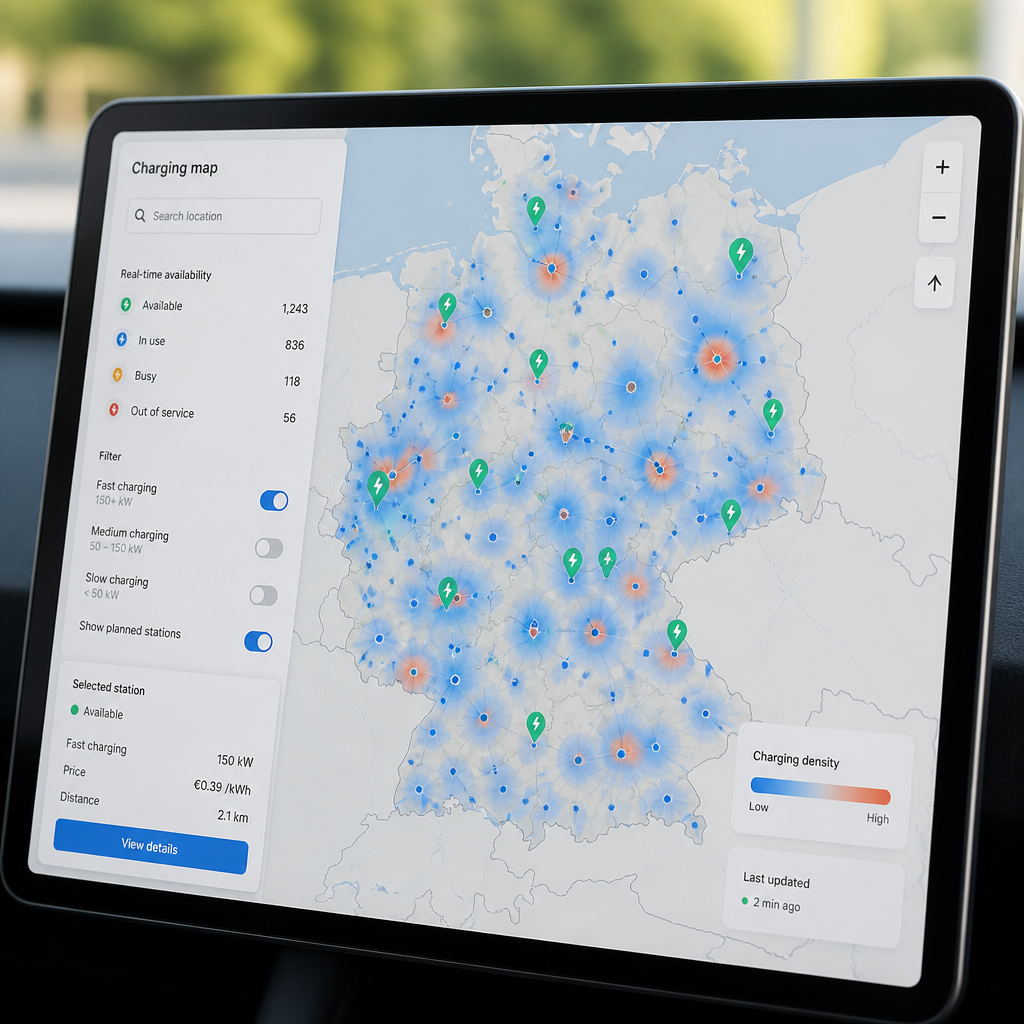
Europe crossed 1.3 million public charging points in 2026, but that headline masks a sharper truth: the EV charging network Europe 2026 is still concentrated in five countries, riddled with rural dead zones, and uneven on fast-charging density, the metric that matters most to drivers. Raw totals tell you little. What follows is a country-by-country breakdown of who is ready, who is catching up, and who is still a problem for cross-border travel.
Table of Contents
- Quick Takeaways
- The State of Public Charging Infrastructure EU Countries in 2026
- Best Country for EV Drivers: The Clear Leaders
- The Fast-Charger Problem: Why AC vs DC Matters
- Eastern and Southern Europe: The Gap Is Closing Faster Than You Think
- Electric Car Charging Availability Europe: What AFIR Is Actually Delivering
- The Cost of Public Charging Across Europe
- Country Comparison Table
- How to Evaluate Charging Readiness Before You Buy an EV
- Frequently Asked Questions
- References
Quick Takeaways
Key Insight
Explanation
Europe has 1.3 million public charging points in 2026
Growth of roughly 6% in the first four months of 2026, but the network is 81% slow AC chargers, which limits real-world road trip utility.
Five countries hold two-thirds of all chargers
The Netherlands, Germany, France, the UK, and Belgium collectively account for around 66% of European public charging infrastructure.
Norway is the standout leader in fast-charging density
Norway has approximately 1.75 DC fast chargers per 1,000 inhabitants, the highest ratio on the continent, combined with low charging costs.
Most EU countries are already ahead of their 2027 AFIR corridor targets
20 out of 27 EU member states reached their Comprehensive network target a full 18 months ahead of the deadline.
Charging prices vary dramatically across Europe
Finland and Bulgaria offer median fast-charging costs around €0.38/kWh, while Ireland sits among the most expensive markets on the continent.
Poland is the biggest catch-up story
Poland nearly tripled its TEN-T Core corridor coverage in under two years, going from 20% at end-2024 to 59% by June 2026.
Rural charging deserts are still a real problem
Gaps of 40 km or more between charging stations persist in rural areas, particularly in parts of Southern and Eastern Europe and rural Scandinavia.
The State of Public Charging Infrastructure EU Countries in 2026
Public charging grew from roughly 1.06 million points at the end of 2025 to over 1.17 million across the EU27 by June 2026. Including UK and Norway data, the broader European figure is approximately 1.3 million. On paper, that is strong momentum.
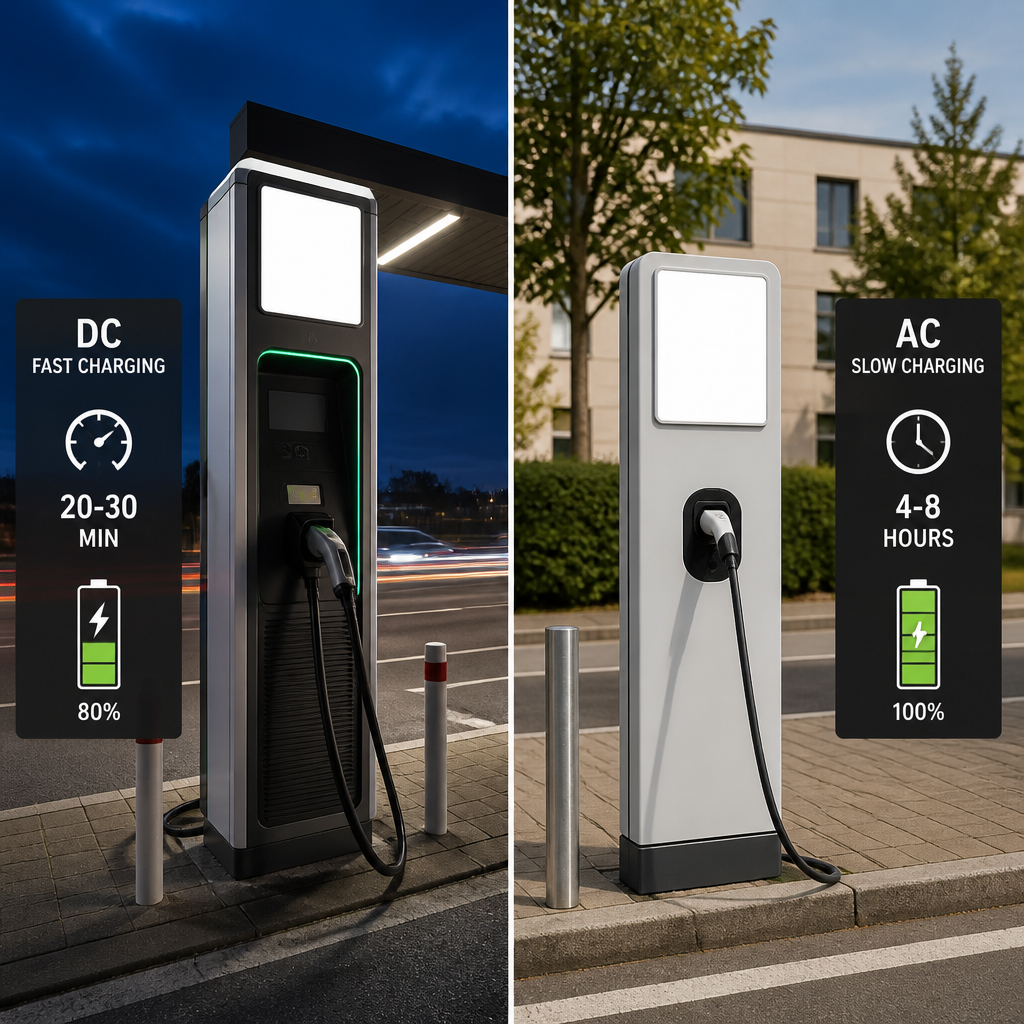
In practice, around 81% of European public charging points are AC units. They suit home and workplace charging, but they mean multi-hour waits on road trips. DC fast chargers, which enable confident long-distance driving, make up only about 19% of the total.
The concentration problem is equally significant. The Netherlands, Germany, France, the United Kingdom, and Belgium hold approximately two-thirds of all infrastructure, leaving 22 other EU member states to share the rest.
Best Country for EV Drivers: The Clear Leaders
Norway: The Benchmark Nobody Else Has Matched
Norway ranks first globally in EV readiness indices, with a score of 73.2 out of 100. It has approximately 1.75 DC fast chargers per 1,000 inhabitants, the highest ratio on the continent, and among the lowest charging costs in Europe. For EV drivers there, range anxiety is largely a solved problem.
Germany: Large Network, Uneven Distribution
Germany has over 211,000 public charging points and ranks second in absolute terms. Its target is one million points by 2030, but distribution is uneven: many communities, particularly outside major cities, still have minimal or no public charging. Urban EV ownership is well supported, while rural ownership is a different experience.
Pro tip: When evaluating any country's charging readiness, always separate the total charger count from the DC fast charger count. A country with 100,000 chargers that are 40% DC fast is practically more useful for road trips than one with 200,000 chargers that are 95% slow AC. Use a tool like Wise EV's real-world range analysis to understand how your specific vehicle's charging speed interacts with the available network in your target country.
The Fast-Charger Problem: Why AC vs DC Matters
The AC versus DC distinction is the single most important variable in whether public charging is usable for drivers without home charging or for anyone planning longer trips.
AC chargers at 7 to 22 kW add roughly 30 to 100 km of range per hour, while a 150 kW DC charger can add 200 to 300 km in 20 to 30 minutes. For anyone on a cross-country drive, AC-only highway stops are a serious problem.
The UK, Spain, Portugal, and Poland all have fast-charging shares above 25% of their networks, which makes them more practically useful than raw totals suggest.
A large AC-heavy charging network gives you numbers. A well-placed DC fast-charging network gives you freedom. The difference is the 20 minutes versus 4 hours you spend at a motorway service area.
Pro tip: Before you switch from an ICE vehicle to an EV, run the numbers on your real driving patterns. How often do you drive more than 200 km in a single day? How often do you have home charging available? If the answer to the first is "regularly" and the second is "rarely," fast-charging density in your region matters more than any headline figure. Wise EV's ownership cost calculator lets you factor real-world charging costs into the total cost comparison between EV and ICE models.
Eastern and Southern Europe: The Gap Is Closing Faster Than You Think
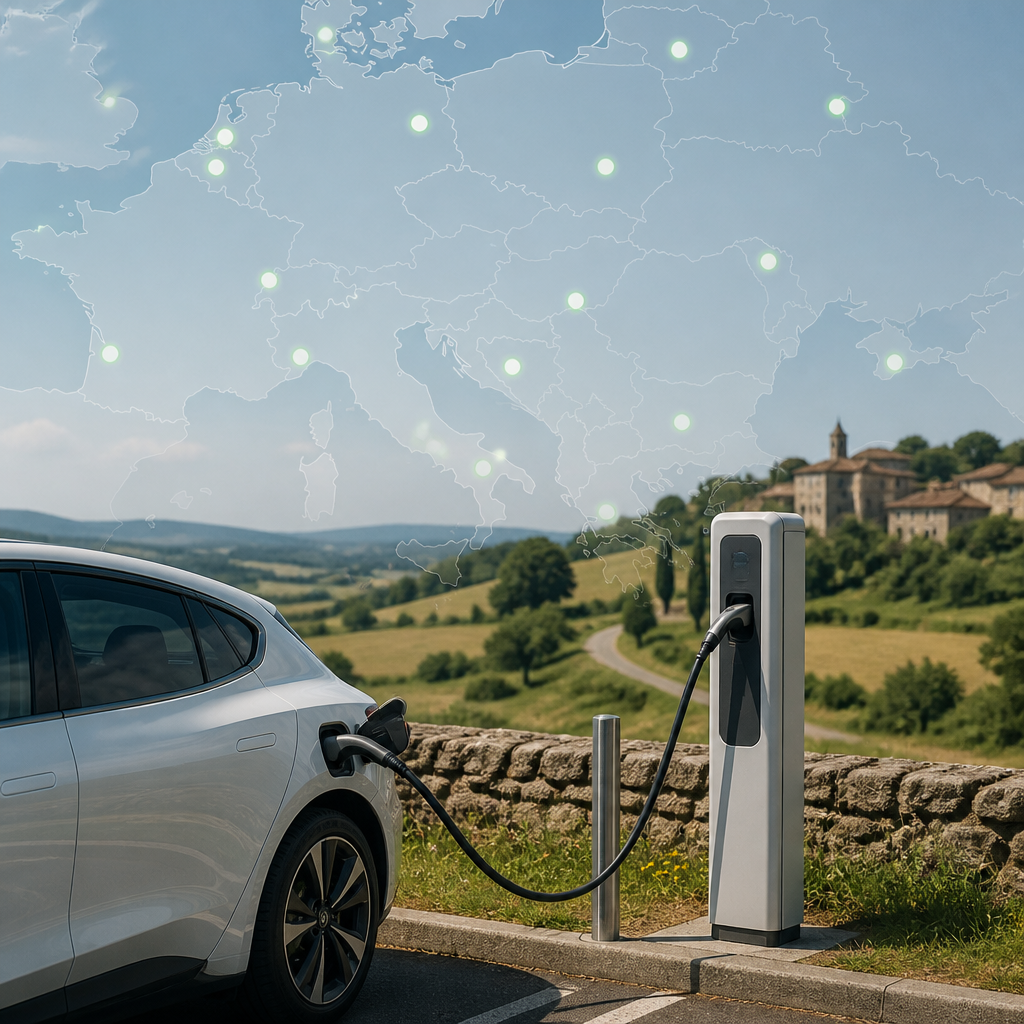
Several Eastern and Southern markets are closing the gap faster than many first-time buyers expect.
Poland has gone from covering 20% of its TEN-T Core corridor targets at the end of 2024 to 59% by June 2026, nearly tripling coverage in under two years. Its fast-charging share also exceeds 25%.
Spain and Portugal show a similar pattern. According to Transport & Environment analysis, over 90% of Spain's outstanding TEN-T coverage targets could be met by upgrading just 22 strategically placed charging pools, most of which are already built. Rural "charging deserts" with gaps over 40 km remain common across the eastern half of the continent.
Electric Car Charging Availability Europe: What AFIR Is Actually Delivering
The Alternative Fuels Infrastructure Regulation (AFIR), in force since April 2024, requires a DC fast charger of at least 150 kW every 60 km along the TEN-T Core network. By June 2026, 79% of that network met the requirement, with the remaining gaps clustering in Eastern Europe and Spain.
From April 2026, charge point operators must also make real-time pricing, availability, and connector status data available through open APIs. Navigation apps should increasingly show whether a charger is actually free before you arrive.
The Cost of Public Charging Across Europe
Public charging costs vary enough to change the EV versus ICE comparison. Finland and Bulgaria offer the lowest median fast-charging prices, at around €0.38 per kWh, while Ireland is among the most expensive markets.
Charging at home on a standard domestic tariff is almost always cheapest, and public fast charging is the cost variable first-time buyers most often underestimate. Tools like the comparison features on Wise EV let you plug in your driving mix and local tariffs to get a realistic annual cost figure.
Country Comparison Table
Country
Total Public Charging Points (April 2026)
Notable Strength
Netherlands
220,596
Highest volume in Europe; best charger-to-EV ratio on the continent
Germany
211,690
Large DC fast-charger rollout; national 1 million target by 2030
France
192,036
Consistent network expansion; target of ~400,000 by 2030
United Kingdom
119,080
Fast charging share above 25%; deliberate DC investment priority
Belgium
111,703
Outperforms its size; strong urban and highway coverage
Norway
Not in EU27 count but estimated ~1.75 DC chargers per 1,000 residents
Highest fast-charger density per capita; ranked #1 globally in EV readiness
Poland
Growing fast; TEN-T Core coverage 59% as of June 2026
Fastest catch-up trajectory in Eastern Europe; DC share above 25%
Finland
Smaller network overall
Lowest median fast-charging cost in Europe at ~€0.38/kWh
How to Evaluate Charging Readiness Before You Buy an EV
The right question is not whether a country "has enough chargers" overall. Ask how many DC fast chargers sit within a realistic range of your regular routes, whether the motorway junctions you use have coverage, and whether public prices keep your annual energy cost below what you pay for petrol.
Germany has over 200,000 chargers yet still has communities with zero public access. A side-by-side vehicle comparison tool brings this infrastructure picture into real-world range and total cost of ownership.
A common error is comparing a petrol car's 600 km tank range against an EV's stated WLTP range. The better question is whether you can comfortably do a 400 km drive with one 25-minute stop. In the Netherlands, Germany, Norway, France, and the UK, the answer is usually yes for major routes. In parts of Eastern Europe, check the map before you leave.
For UK buyers, Department for Transport data shows 119,080 public chargers as of April 2026, and EU buyers can use the EAFO database for national detail. Real-world range analysis and ownership cost data then turn those averages into what they mean for your vehicle and driving pattern.
Frequently Asked Questions
Which European country has the most public EV charging points in 2026?
The Netherlands leads with over 220,000 public charging points as of April 2026, followed by Germany with around 211,000 and France with approximately 192,000.
How does AFIR affect EV charging availability across Europe?
AFIR requires DC fast chargers of at least 150 kW every 60 km along the TEN-T Core network, and 79% of that network was covered by June 2026. Operators must also publish live pricing and availability data via open APIs from April 2026.
If you are working through a first EV purchase decision or comparing specific models, share your experience in the comments: which factor mattered most to you, the charging network coverage or the total cost comparison?
References
- Europe's public EV charging network reaches 1.3 million points by April 2026, with country-by-country data from EAFO and UK DfT
- Transport and Environment analysis of EU country performance against AFIR charging targets and corridor coverage as of June 2026
- CleanTechnica analysis: how charging infrastructure compares to EV fleet size across EU member states in 2026
- Fast-charging price comparison across European countries, with median cost per kWh by market
- Analysis of Europe's charging infrastructure gap relative to the 2030 target of 3.5 million public charging points