EV Depreciation Europe: Which Models Hold Value Best
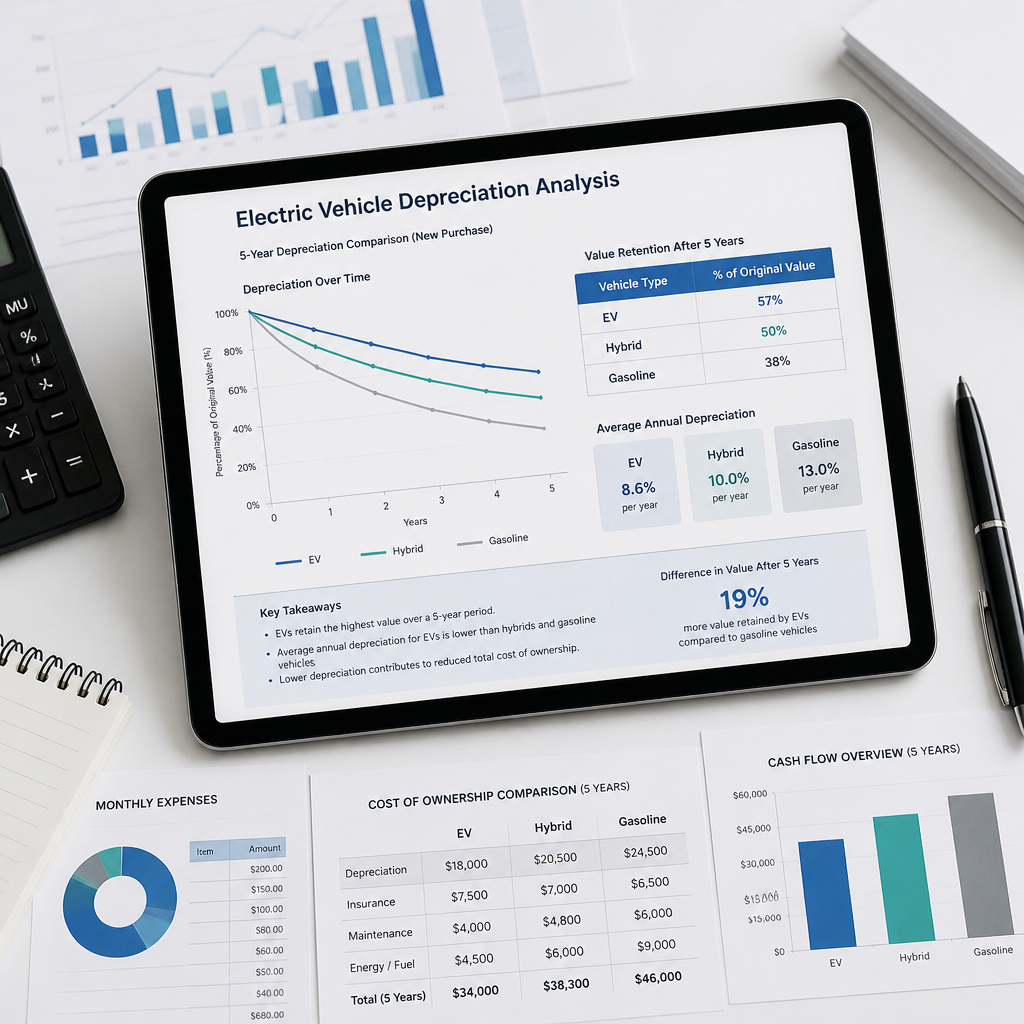
Most people buying an electric vehicle in Europe focus on range, charging speed, and running costs, and rarely look at depreciation until they try to sell. That is a costly mistake. EV depreciation in Europe can wipe out more than 60% of a vehicle's value within three years on some models, while the best-retained EVs hold well above half their original price. This guide explains how EV depreciation works and which models give European buyers the strongest resale position.
Table of Contents
- Quick Takeaways
- How EV Depreciation Actually Works
- Why EVs Depreciate Faster Than ICE Cars
- Factors That Protect EV Resale Value
- Best EV Resale Value in Europe 2025/2026
- EV vs ICE Depreciation Compared
- How to Use Depreciation Data When Buying
- Frequently Asked Questions
- References
Quick Takeaways
Key Insight
Explanation
Average 3-year EV depreciation in Europe sits at roughly 38-42%
That is slightly higher than equivalent petrol cars at 35-40%, but the gap is narrowing as the used EV market matures.
Battery health is the single biggest residual value driver
Buyers discount heavily for perceived battery risk. A verified State of Health report can meaningfully recover asking price on a used EV.
Tesla Model 3 and Model Y consistently top UK and EU retention charts
The Tesla Model 3 retains approximately 71% of its value after three years in the UK, the strongest performance among mainstream EVs.
High list price does not guarantee good retention by percentage
Premium EVs like the Porsche Taycan can look acceptable on percentage but lose enormous sums in cash terms due to their high starting price.
Software update history now affects resale price
EVs with a verified over-the-air update record hold value better because buyers factor software currency into their battery assessment.
Fleet returns are flooding the European used EV market
Used BEV transactions in Europe grew 32% year-on-year in Q1 2026. More supply without matching demand pushes residuals down on high-volume models.
The year-one drop is the steepest and the most avoidable
Buying a one-year-old EV rather than new transfers the steepest depreciation cliff to the first owner, giving the second buyer a much better deal.
How EV Depreciation Actually Works
Depreciation is the difference between what you pay for a vehicle and what you receive when you sell it. EVs add a layer of complexity that traditional pricing models were not built to handle.
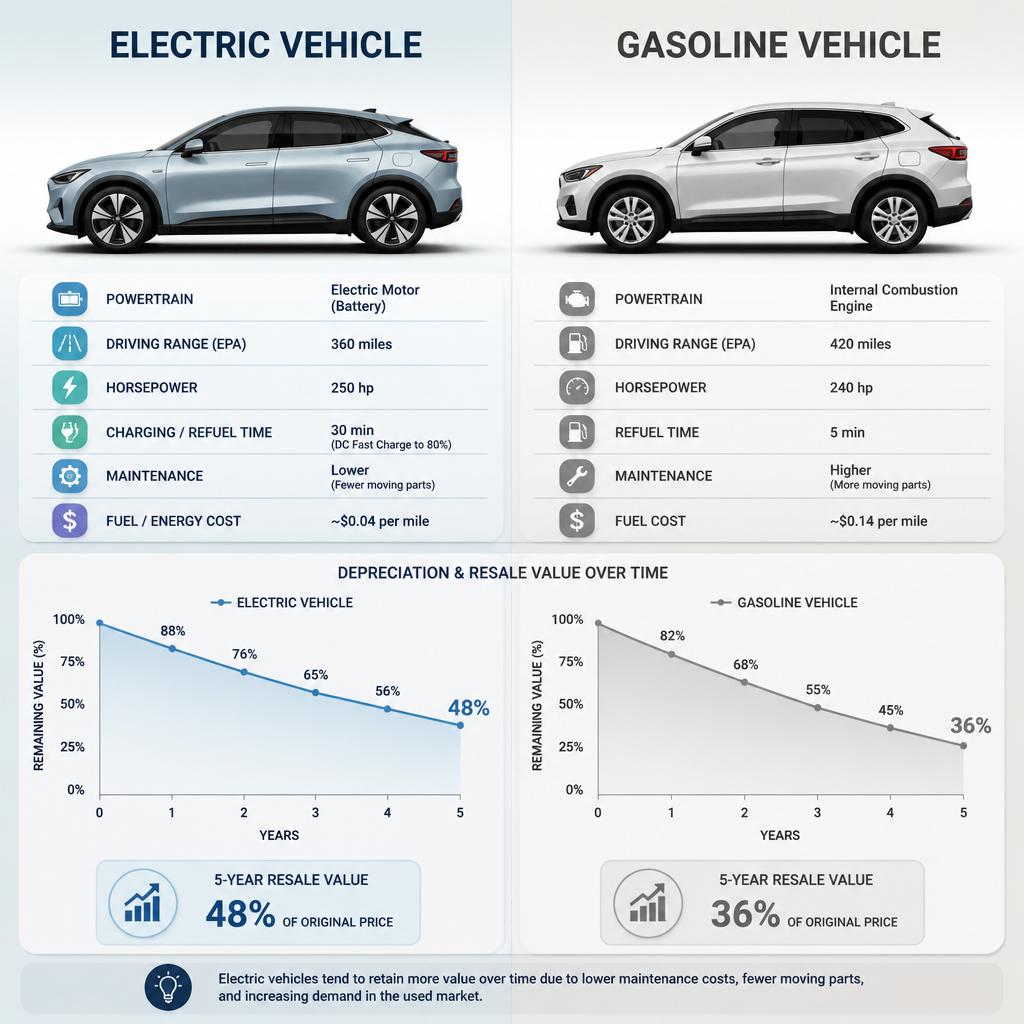
In the UK, average EV depreciation in year one runs between 25-35%, compared with 15-25% for an equivalent petrol car. By the three-year mark, the average EV has lost around 61% of its original value, against roughly 47% for petrol.
The average masks a wide spread. The worst-performing EVs shed value at roughly double the rate of the best ones, so identifying which side a model sits on is the core task for any European buyer.
The first-year cliff and why it matters
New car depreciation always concentrates in year one, and for EVs the drop is steeper because the technology trajectory is faster. After year one, depreciation tends to slow and often tracks petrol car patterns more closely, so a well-maintained one-year-old EV from a first owner is a defensible used-vehicle strategy.
Why EVs Depreciate Faster Than ICE Cars
Several distinct forces make EV depreciation patterns different from petrol or diesel cars.
Battery anxiety among used buyers
The most powerful force is not actual battery deterioration but buyer fear of it. Many used buyers attach a mental discount for what might have happened to the battery, even when State of Health data shows minimal degradation. That discount suppresses transaction prices across the board.
Battery health remains one of the most significant influences on EV resale values, with charge cycle data and maximum fast-charge rates factoring into what a used buyer will pay.
Fleet supply outpacing retail demand
Used BEV transactions in Europe grew 32% year on year in Q1 2026, driven mainly by ex-fleet and salary sacrifice returns. More supply without a matching rise in retail buyer confidence creates the classic depreciation condition: too many cars, not enough buyers at the required price.
The EV and ICE depreciation gap is narrowing as the used EV market matures, but battery health, vehicle range, charging capability and service history remain decisive influences on EV residual values.
Factors That Protect EV Resale Value
Not all EVs are equal when it comes to holding value, and the differences are explainable. The models that outperform the market share a recognisable set of characteristics.
Over-the-air software update capability
EVs that receive regular over-the-air updates feel current for longer. Used buyers are increasingly aware of this, and vehicles with a verified update history attract stronger bids.
Charging speed and network compatibility
Models that support rapid DC charging and use widely available standards like CCS face less of a residual penalty than those tied to proprietary or obsolete connectors. The original Nissan Leaf's CHAdeMO connector, for example, is a documented drag on its already-weak used values in Europe.
Pro tip: When evaluating any EV for purchase, check which charging standard it uses and whether that standard has broad public infrastructure coverage in your country. A car that fast-charges on a network with poor coverage in your area carries a hidden depreciation risk that will appear when you sell.
Best EV Resale Value in Europe 2025/2026
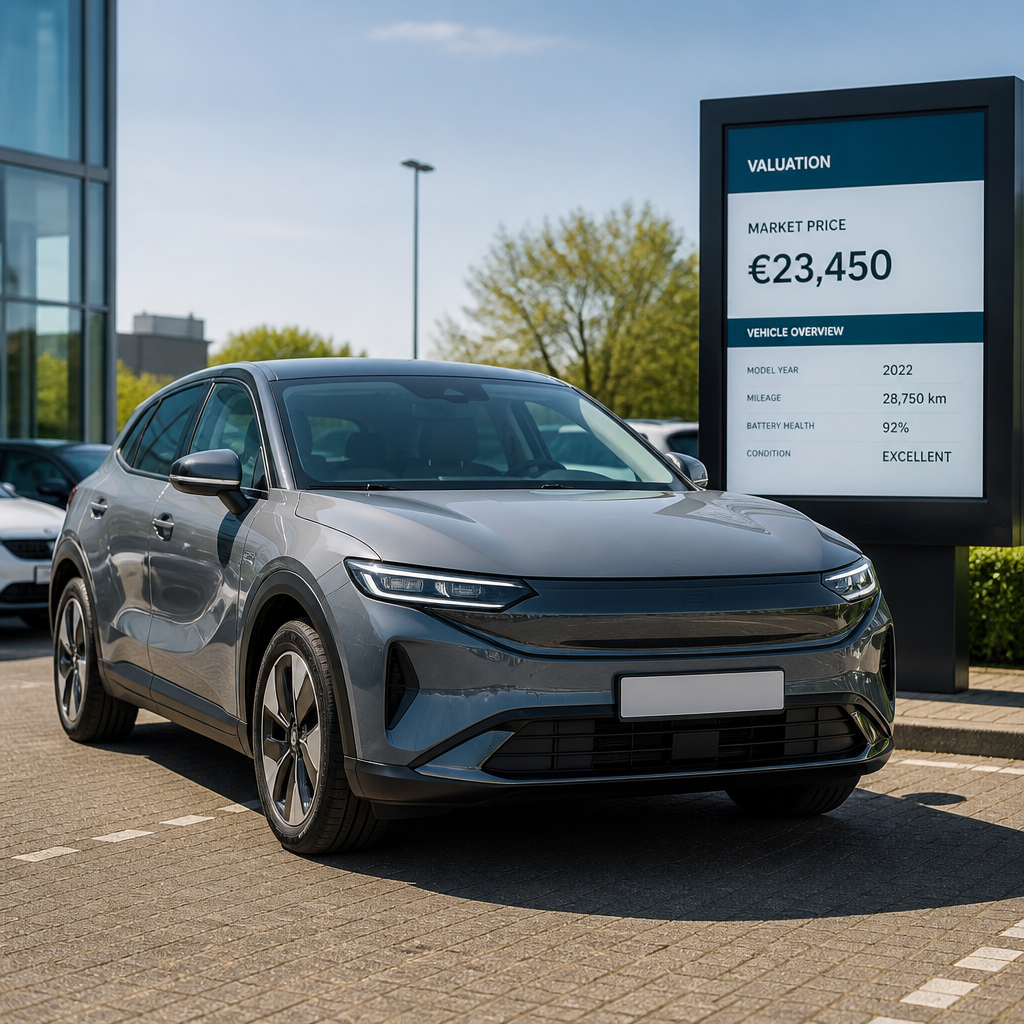
The following models consistently appear at the top of UK and EU residual value analyses. The figures are indicative ranges, since local market conditions, mileage, and condition all affect the actual sale price.
Tesla Model 3 and Model Y
The Tesla Model 3 retains approximately 71% of its value after three years in the UK, the strongest performance among mainstream EVs, and the Model Y is close behind. Both benefit from Supercharger access, regular software updates, and persistent brand demand.
Models where depreciation is severe
Older Nissan Leaf models, first-generation Audi e-tron/Q8 e-tron, early Jaguar I-Pace, and older Renault Zoe models have been the weakest performers in European used markets. The Leaf's CHAdeMO connector, high original list prices, and limited used demand have produced five-year retention figures as low as 11-12% in UK studies.
Pro tip: Before buying any used EV, request a full battery State of Health report. In the UK and across the EU, third-party battery diagnostic services can produce this from the car's onboard data. A verified SoH above 85% materially reduces the discount a buyer is entitled to apply and strengthens your own resale position later.
EV vs ICE Depreciation Compared
The table below summarises average depreciation patterns in the UK and broader European market as of 2026, drawing on data from Cox Automotive and multiple used market analyses. The ICE figures represent equivalent petrol vehicles, not diesel.
Metric
Average Electric Car (EU/UK 2026)
Average Petrol Car (EU/UK 2026)
Year 1 depreciation (typical)
25-35%
15-25%
3-year total depreciation
38-42% (average); up to 61% at the high end
35-40%
5-year total depreciation
Roughly 65-78% for most models
Roughly 55-65%
Main depreciation driver
Battery health perception, technology pace, fleet supply, incentive changes
Mileage, condition, new plate launches
Steepest depreciation period
Year 1, and age bracket 1-2 years
Year 1 (first registration)
Best-retained models vs class average
Tesla Model 3/Y, Kia EV6, Hyundai Ioniq 5 retain well above average
Toyota, Honda, and mainstream German brands outperform on residuals
Cox Automotive data from 2026 records average EV depreciation at 38-42% after three years versus 35-40% for petrol, a gap of three to five percentage points. That gap is narrowing as the used EV market matures.
How to Use Depreciation Data When Buying
Depreciation data is only useful if you act on it at the point of purchase. Treating resale value as a primary selection criterion changes the analysis significantly.
Run the total cost of ownership, not just the monthly payment
A low monthly PCP payment can conceal a very high depreciation cost if the balloon payment or guaranteed future value is aggressive. When the EV depreciates heavily, running cost savings may not cover the additional capital loss. The Wise EV ownership cost calculator is built to surface this comparison for EU and UK buyers.
Use depreciation data to find used bargains, not just to protect new purchases
EV resale value data works in both directions. Models that depreciate fastest as new purchases become the best used bargains. A Volkswagen ID.3 or ID.4 that has shed 40-45% in year one may cost less than an equivalent petrol car. The comparison tools at Wise EV let you run this calculation directly.
Frequently Asked Questions
Do electric cars depreciate faster than petrol cars in Europe?
On average, yes. As of 2026, average three-year EV depreciation in the UK and EU sits at 38-42%, compared to 35-40% for equivalent petrol cars, and the range within EVs is very wide.
Which electric car holds its value best in the UK and EU?
The Tesla Model 3 consistently leads mainstream EV retention data, retaining approximately 71% of its value after three years in the UK. The Kia EV6 and Hyundai Ioniq 5 are the strongest challengers.
How does battery health affect EV resale value?
Battery health is the most significant single factor in EV resale value after brand and demand. A verified State of Health report can recover meaningful value at point of sale.
Why did EV values fall so sharply between 2022 and 2024?
Rapid technology progress made recent models look dated faster, while large numbers of fleet and salary sacrifice vehicles returned to the used market at the same time. Sudden cuts to purchase incentives in some EU markets widened the drop.
Is it better to buy a new EV or a one-year-old used EV to minimise depreciation loss?
For most European buyers, a one-year-old EV from the first owner is the better choice, because the steepest part of the depreciation curve has already been absorbed. Verify warranty coverage and battery health before buying.
Does the EV's charging standard affect its future resale value?
Yes. CCS-equipped EVs avoid connector-obsolescence discounts, while models with proprietary or limited-coverage connectors carry a persistent residual value penalty.
How can I compare EV and ICE total ownership costs including depreciation?
Use a tool that calculates the full cost of ownership, including purchase price, projected resale value, energy or fuel costs, insurance, and servicing. Generic finance calculators often do not model depreciation correctly.
References
- Cox Automotive Europe: EV vs ICE depreciation and residual values explained, including 2026 market data
- UK Electric Car Depreciation Guide 2026: model-by-model rates and market context
- EV Depreciation Study 2026: 74 electric cars ranked by value retention and pounds lost in the UK market
- EV depreciation winners and losers across major European markets including UK and Germany
- Why electric vehicles depreciate faster: the structural causes explained for UK and EU buyers