Used EV Buying Guide: Depreciation and Battery Health
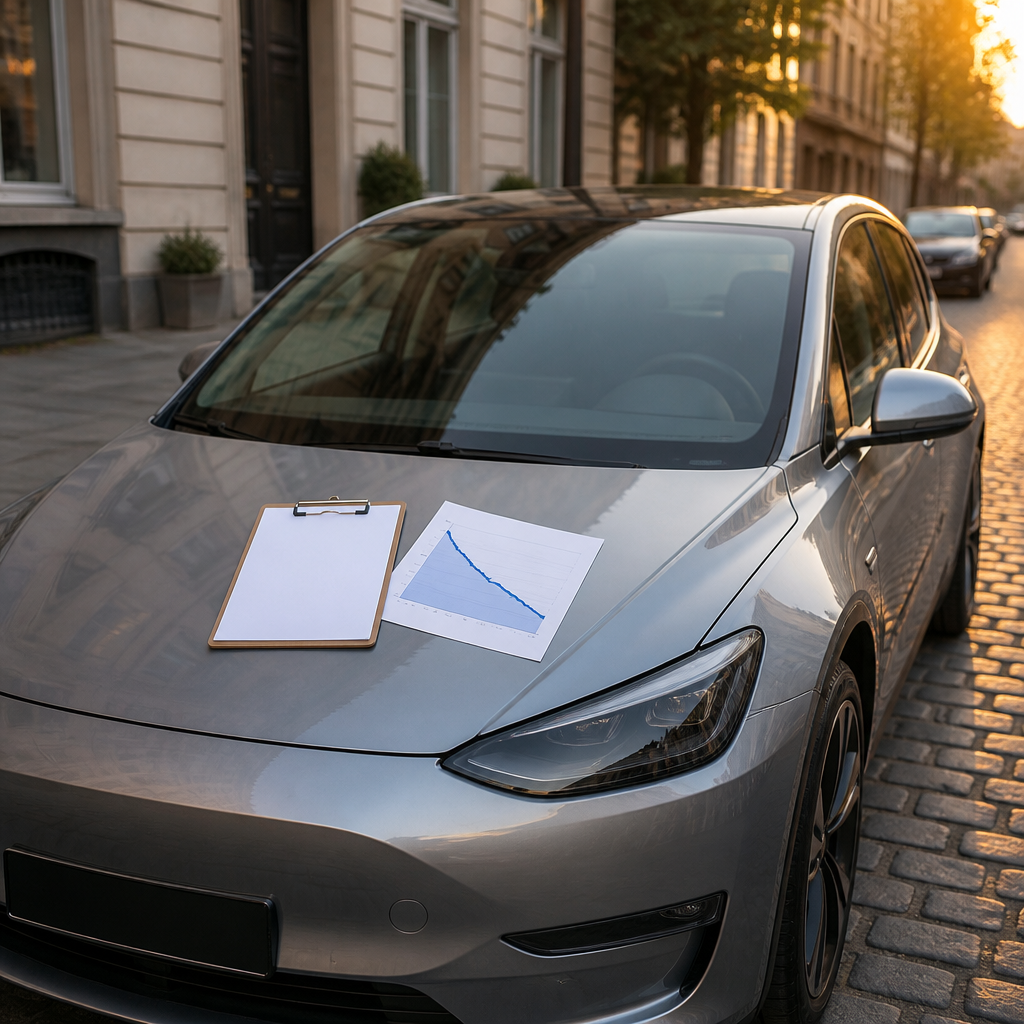
Used electric cars can look like the best deal on the forecourt, with prices that have already fallen sharply and running costs that can beat petrol cars. The catch is that the same forces that make them cheap, especially fast depreciation and an unknown battery history, are exactly what buyers rarely check properly. This used EV buying guide explains how to read depreciation honestly, how to judge battery health before you pay, and where the real savings come from for buyers in Europe and the UK.
Table of Contents
- Quick Takeaways
- Why Used EVs Depreciate Faster
- How to Read a Depreciation Curve Without Guesswork
- Battery Health: What to Check Before You Buy
- Real-World Range Loss in Used EVs
- Ownership Costs Beyond the Asking Price
- Used EV Buying Routes Compared
- Buying Checklist for European Buyers
- Frequently Asked Questions
- References
Quick Takeaways
Key Insight
Explanation
Depreciation is steep but predictable
Published estimates put average EV depreciation around 38 to 42 percent after three years, so a car bought at year two or three can carry a much lower price.
Compare the same model, year and battery size
Averages hide big differences, so build a price comparison from at least three to five matching listings before you negotiate.
Ask for a dated battery health report
Insist on a report tied to the car's VIN, not a verbal assurance from the seller.
Test the car on a fast charger
A healthy battery accepts power steadily, and warnings during charging are a reason to pause the sale.
Expect less range in winter
Plan a usable range margin for cold weather, motorway speeds and gradual battery ageing.
Price your charging honestly
Home charging drives most of the savings, and frequent public fast charging can erase much of the advantage.
Why Used EVs Depreciate Faster
Electric cars lose value faster than petrol cars, and the numbers are consistent enough to plan around. A 2022 empirical study by L. Schloter found EVs depreciating about 1.16 percent per month, roughly 13.9 percent per year, against 0.87 percent per month (about 10.4 percent per year) for gasoline vehicles.
Cox Automotive's EV hub puts average EV depreciation at 38 to 42 percent after three years, and notes that the gap with combustion cars is narrowing as the used market matures. Two independent sources point the same way, even though exact figures shift by model, mileage and country.
Why the Gap Exists
Three forces drive the difference. Battery technology and charging speeds are still improving, so a car from three years ago can look dated next to a new model. Manufacturers have also cut list prices on several electric models, which pulls used values down with them.
Buyers also discount older EVs heavily because they fear battery problems, often more than the car's actual mechanical condition justifies. That fear creates bargains for informed buyers, but only if you can verify the battery yourself.
What Depreciation Means for Your Budget
In practice, the steepest drop happens in the first years. Buying a car that is two or three years old often captures much of the saving while leaving you with a more predictable price curve.
An EV that has already dropped around 40 percent from its launch price is not automatically a bargain. The mistake is buying a car purely because the sticker looks cheap.
Pro tip: Find the original list price for the exact trim, then compare it with current listings for the same model and year. If the drop is far outside the 38 to 42 percent average range, ask the seller why before you decide it is a deal.
How to Read a Depreciation Curve Without Guesswork
Averages hide the details that matter. Depreciation depends on the exact model, battery size, trim level, mileage and whether a battery or manufacturer warranty still applies, so an industry average tells you the direction, not the price to pay.
Start by comparing like with like. Pull up three to five listings for the same model, year, battery size and mileage band, and note the asking prices over several weeks. A single advert tells you very little.
Model-Specific Results Versus Market Averages
Model results vary widely. The Institute for Energy Research has reported that a Tesla Model 3 can lose 45 percent of its value over a three-year period, which sits well above broader averages. That spread is why a model-specific check matters more than a headline percentage.
Look at how a model's price has moved over time, not just where it sits today. A model whose price has held steady for twelve months is often a safer buy than one still falling every month.
Spotting a Price That Is Too Good
A very low asking price on a used EV usually has a reason behind it. Common causes include a degraded battery, a history of accident repairs, a battery rental arrangement that has not transferred, or a dealer clearing stock before a model change.
Ask why the price is lower than comparable listings, and do not accept vague answers. A fair seller will show you the battery report, service records and charging history without fuss. If they cannot explain the price, walk away.
Battery Health: What to Check Before You Buy
The battery is the most expensive component in a used EV, and it is the part most buyers understand least. State of health (SoH) describes how much usable capacity a battery retains compared with new, and it shapes both real range and future resale value.
Battery health is not visible from the outside. You need the car's own data, a test drive and a clear understanding of the warranty before you commit.
Reading a Battery Health Report
Ask the seller or dealer for a battery state of health report generated by the manufacturer's diagnostic system or an independent EV specialist. Check the date, because a report from six months ago tells you less than one generated last week. Make sure it refers to the exact vehicle identification number of the car you are considering.
Compare the reported figure with the car's age and mileage. A battery that has lost far more capacity than its age suggests, or that shows unusual swings between sessions, needs an explanation before you go further.
Test Drive Checks That Reveal Battery Trouble
On the test drive, watch the state of charge as you drive. A battery that drops percentage points quickly under gentle driving, or a range estimate that falls faster than the charge level, can signal capacity loss or cell imbalance.
If you can, plug the car into a public DC fast charger. A healthy pack should accept power steadily without frequent slowdowns, and any battery or thermal warning is a reason to pause the sale until it is explained.
A battery report tells you what the car remembers. The test drive tells you what it does today, and you need both.
Pro tip: Get the battery warranty terms in writing, including the mileage limit and whether cover passes to a second owner. Warranty length differs between manufacturers and across EU countries and the UK, so read the document rather than relying on a summary.
Real-World Range Loss in Used EVs
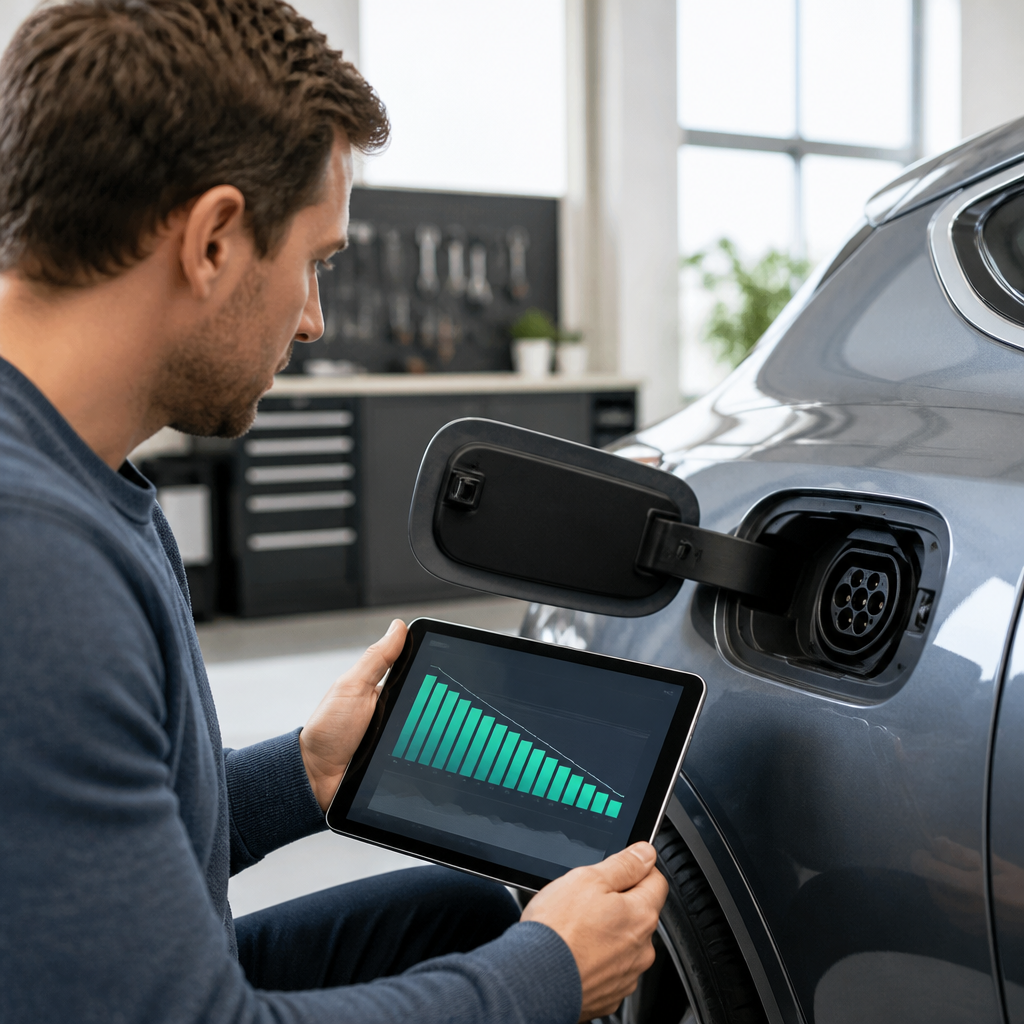
Official range figures come from standard test conditions, and most owners see less on a cold morning with the heater running on the motorway. Used buyers should plan around the range they will actually get, not the number in the advert.
The gap between official and real range can also reveal an older battery. If a car shows a lower full-charge estimate than similar cars from the same year, the battery may be the reason.
Winter Driving in Northern Europe and the UK
In the UK, Germany, the Nordic countries and other northern markets, cold weather noticeably cuts usable range. The impact is greater on short trips, where the cabin and battery need heating from cold.
Ask the seller how the car is usually charged and whether it has a heat pump, since that changes winter performance. Compare the winter estimate with the summer figure to judge how much margin you need.
Building a Range Margin Into Your Decision
Set your own minimum range for your daily routine, then add a margin for winter, motorway speeds and battery ageing. If your commute needs 60 km a day, a car showing 200 km on a full charge in mild weather may still suit you. A car that struggles to reach 150 km in January may not.
Wise EV's real-world range analysis is designed to show these gaps across models, so you can compare realistic figures before you visit a dealer.
Ownership Costs Beyond the Asking Price
A cheap used EV can still cost more over three years than a sensible petrol car if you ignore charging, tyres and insurance. The purchase price is only part of the sum, so build a simple running cost estimate before you agree to anything.
Electricity is usually cheaper per kilometre than petrol, but that advantage depends on where you charge. The gap between home charging and public rapid charging can be wide, and tariffs vary by country.
Home Charging Versus Public Charging
If you can charge at home overnight on a fixed tariff, you will usually get the best running costs. Buyers without off-street parking should price public charging honestly, since frequent fast charging can erase much of the saving.
Ask whether the car comes with a home charging cable and which connector it uses. A missing cable can add an unexpected expense, and some older models limit charging speed in ways that matter for daily use.
Tyres, Brakes and Insurance Surprises
EVs are heavier than comparable petrol cars, which can wear tyres faster, especially for drivers who accelerate hard. Check tyre age and tread depth, and budget for replacements designed for EV loads. Get an insurance quote for the specific model before you buy rather than after.
Brakes often last longer because regenerative braking does much of the slowing. A car that rarely uses its friction brakes can still have seized calipers or corroded discs, so ask when the brake fluid was last changed. Road tax and company car tax rules also differ between EU countries and the UK, so check your local rules before assuming an EV is cheaper to keep.
Used EV Buying Routes Compared
Where you buy matters as much as which model you choose. Each route trades price against certainty, and the right choice depends on how much diagnostic information you can get and how much risk you can carry.
Buying Route
What You Get
Main Risk
Manufacturer-approved used EV
Inspection, battery reporting and extended warranty options
Higher prices and fewer bargains
Independent EV specialist dealer
Often lower prices and staff who understand EV batteries
Quality varies, so ask for battery data and history checks
Private sale
The lowest asking price and direct access to the owner's history
No dealer warranty, limited diagnostics and the highest chance of hidden battery problems
Reliability Data Versus Your Model
Reliability data offers another angle. A Consumer Reports survey in the American market found that EVs and plug-in hybrids had about 80 percent more problems on average than gas-only cars.
The sample does not map directly onto European driving or servicing, but it is a reason to check the record for the specific model rather than assuming electric means trouble-free.
Private Sales Need Extra Diligence
Private sales can look attractive, but you lose the safety net of a dealer's inspection and warranty. If you buy privately, book an independent inspection that includes a battery report.
Ask the seller to show service records and any charging app history the car uses. Gaps in either are a signal to slow down.
Buying Checklist for European Buyers
The used EV market in Europe is growing. The IEA reports that new electric car registrations in Europe reached nearly 3.2 million in 2023, an increase of almost 20 percent on 2022, and those cars will feed the used market in the coming years.
More choice is good news, but it also means more cars with unknown histories and wide differences in condition. A consistent checklist keeps the decision grounded, so use the same steps for every car.

Paperwork and Warranty Transfers
Check that the vehicle history, service records and battery documents match the registration. If the car was leased with a battery rental arrangement, confirm who owns the battery, because that changes both price and risk.
Ask whether the manufacturer's battery warranty transfers to you and for how long. Also confirm that both charging cables, the key or card set and the owner's manual are present.
Software, Tyres and Test Drive Basics
Check for pending software updates and confirm that the infotainment and charging systems respond normally. Look at tyre age, since rubber can age even on a low-mileage car.
Drive a route that includes urban roads and faster sections, and watch for uneven charging behaviour or range estimates that look wrong.
Pro tip: Bring a second person on the test drive and ask them to watch the dashboard while you drive. Two sets of eyes make warning messages and odd range readings much easier to catch.
Frequently Asked Questions
Are used EVs really worth buying?
Often yes, if the battery health checks out and the price reflects the car's age and condition. Depreciation that hurts sellers works in buyers' favour, but only if you verify the battery and factor in your own charging situation.
What is a good battery state of health for a used EV?
There is no single threshold that fits every model, so compare the reported figure with the car's age, mileage and typical results for that model. A significant gap from similar cars is a reason to ask questions, negotiate or walk away.
How much value does a used EV lose each year?
A 2022 study estimated that EVs lose about 13.9 percent of their value per year on average, compared with about 10.4 percent for gasoline vehicles. Cox Automotive's EV hub puts average EV depreciation at 38 to 42 percent after three years, though results vary widely by model.
Can I check battery health myself?
Some information is visible through the car's own displays and charging behaviour, but a full state of health assessment needs diagnostic data. Ask for a recent battery report from the manufacturer or an independent EV specialist, and combine it with a test drive that includes a fast charge.
Is a used EV cheaper to run than a used petrol car?
It usually is, especially if you charge at home on a sensible tariff. The savings shrink if you rely on public fast charging, so compare tyres, insurance and local tax rules for your country before deciding.
Does a battery warranty transfer to a second owner?
It depends on the manufacturer, the model and the warranty terms, and these differ across EU countries and the UK. Read the written warranty and confirm the mileage and time limits before you agree a price.
Have you bought a used EV in Europe or the UK, and did the battery or depreciation turn out differently than you expected? Share your experience in the comments.