Used EVs in Europe: Benefits, Risks and Battery Health

Buying a used EV in the UK is no longer a niche gamble. Used electric cars have become one of the fastest-growing corners of the second-hand market — across Europe the used EV market passed $63 billion in 2025 and is growing at double-digit rates — and used EVs now routinely sell for 30–50% less than their new equivalents. Yet most buyers walk into the process without knowing how to assess the real condition of the battery, the component that can determine more than half the vehicle's value. This guide breaks down exactly what you need to know before signing anything, with concrete criteria and no fluff.
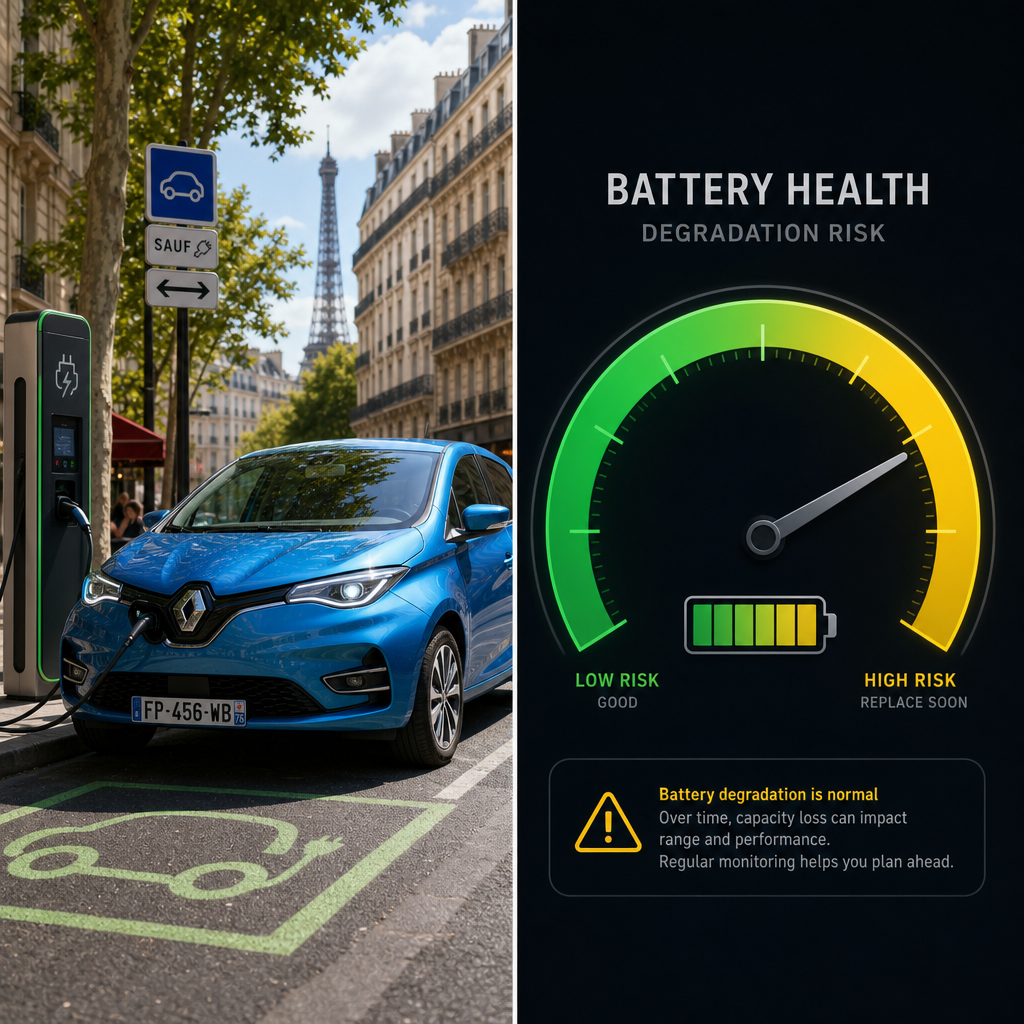
Table of Contents
- Benefits of buying a used EV
- The real risks nobody tells you about
- How to check the battery health of a used electric car
- Battery verification methods compared
- Where to buy a used EV in the UK
- Grants and incentives in 2026: what applies to used EVs
- Warranties and your legal rights
- Frequently Asked Questions
- References
Quick Summary
| Key Point | Explanation |
|---|---|
| Battery state of health (SoH) is the single most important number | An SoH below 80% significantly reduces range and can indicate accelerated degradation. Always demand the report before buying. |
| Real savings are typically £7,000–£13,000 versus buying new | EVs lose value fastest in their first two years, which works in the used buyer's favour if the car has been looked after. |
| Battery warranties vary drastically between brands | Some generous battery warranties don't automatically transfer to the second owner. Check before closing the deal. |
| Rapid-charging history matters more than you think | Cars that have been DC rapid-charged intensively show higher degradation. Ask for the charging history if the manufacturer records it. |
| There is no UK grant for used EVs | The Electric Car Grant (up to £3,750) applies to new cars only. A battery health certificate (£60–£100, often free from approved-used dealers) is the used buyer's best tool instead. |
| Used EVs built after 2019 are the sweet spot | Models built from 2019 onwards have more stable battery chemistry and better thermal management. Avoid earlier cars except in very specific cases. |
| Comparing EV vs ICE on total cost of ownership changes the decision | The cost per mile of a used EV is typically 30–50% lower than an equivalent petrol or diesel car, mainly thanks to energy and maintenance. |
Benefits of buying a used EV
Depreciation on new electric cars is notoriously steep during the first 24 months, although residual values began stabilising through 2025–2026. That's bad news for whoever bought new — and a considerable advantage for whoever buys the same car used. According to Autovista Group data, an EV loses on average 20–30% of its value in the first year, compared with around 15% for an equivalent combustion car.
The practical result is that you can get into a Tesla Model 3, Volkswagen ID.4 or Kia e-Niro with relatively recent technology at prices that would have been unthinkable three years ago. It's not just the upfront saving: total cost of ownership drops dramatically thanks to lower fuel and maintenance bills.
Maintenance savings: the real numbers
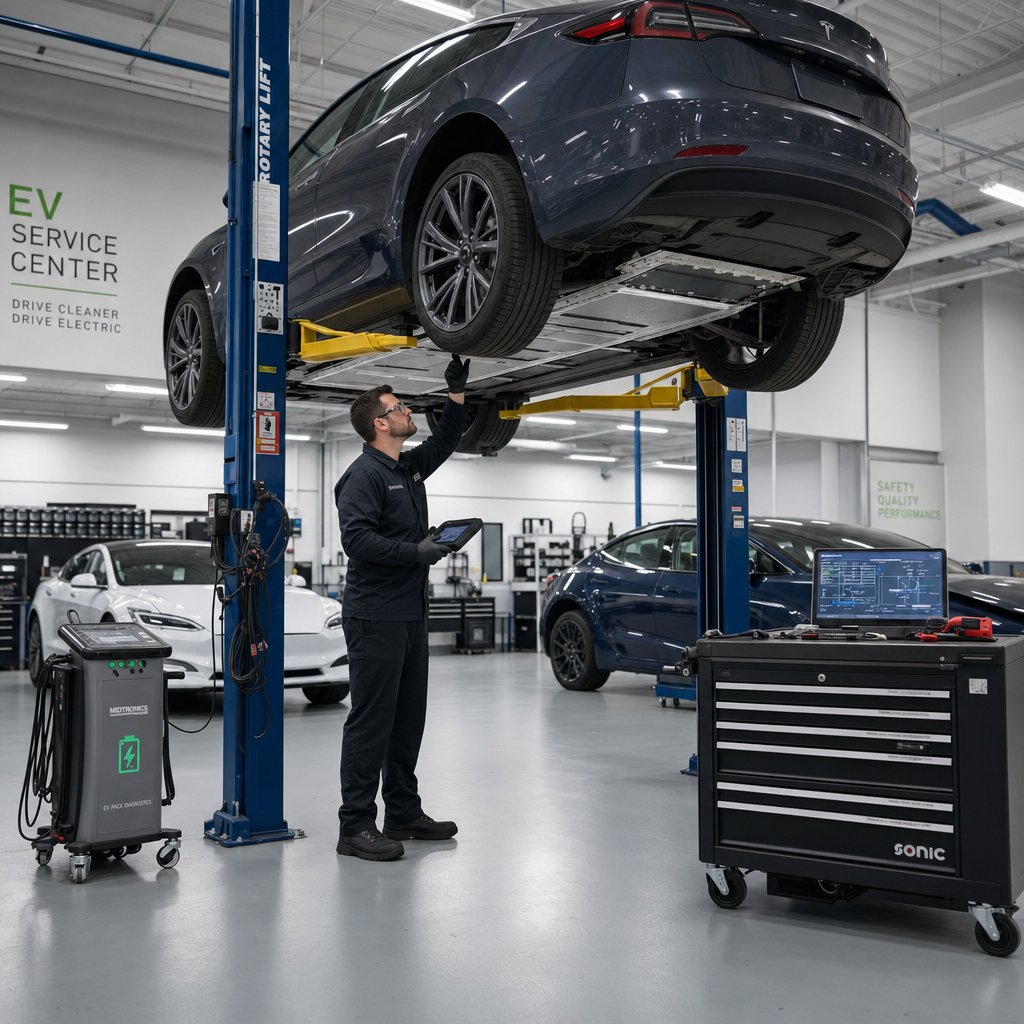
An EV has no clutch, no timing belt, no exhaust system and no oil filter. McKinsey estimates the maintenance cost of an electric vehicle is 30–40% lower than a combustion car over its lifetime. On a used car that has already absorbed the initial depreciation, that saving kicks in from month one.
Brakes last longer too. Regenerative braking reduces pad and disc wear — on a well-managed EV they can last twice as long as on a conventional car. In practice, used EV owners we consulted spent around £250 a year on maintenance versus the £650–£700 typical for similar-class ICE cars.

Clean air zones: cheaper, simpler city driving
London's ULEZ now covers all boroughs, and Clean Air Zones operate in Birmingham, Bristol, Bath, Sheffield and other cities. A used EV is exempt from every one of them, regardless of registration year. To be fair, most modern petrol cars also meet ULEZ standards — but an EV is exempt from the London Congestion Charge cleaner-vehicle changes debate entirely at zone level, is future-proof against tightening rules, and in many councils still gets discounted residents' parking. If you drive into charging zones regularly, the savings are concrete and measurable.
Tip: If you live in or commute into a city with an active clean air or congestion charging zone, calculate how many chargeable trips you make per week before deciding between a used EV and a used ICE car. The mobility value often exceeds the price difference.
The real risks nobody tells you about
The biggest risk when buying a used EV isn't the technology — it's the lack of standardised information about battery condition. Unlike a combustion engine, where a mechanic can run a reliable diagnosis in minutes, an EV battery requires specific tools and specialist knowledge that not all sellers have, or volunteer.
Battery degradation: what's normal and what isn't
Degradation of 2–4% per year is normal for most lithium-ion batteries under standard use. A four-year-old car should have an SoH (State of Health) between roughly 84% and 92%, depending on model and usage history. Below 80% on a car under five years old, the asking price should reflect it with a significant discount.
A common mistake is assuming the range shown on the instrument cluster represents the battery's real condition. That figure can be skewed by outside temperature, recent driving style, or even the calibration state of the battery management system (BMS). Never treat that reading as a definitive diagnosis.
Warranties that don't transfer
Some of the most generous battery warranties on the market, such as those on the Hyundai Kona Electric or Nissan Leaf, have transferability conditions that don't always apply automatically to the second owner. In practice, we've seen buyers assume they had battery cover and discover a year later that the warranty had lapsed or wasn't transferable under the original contract terms.
Software is another underestimated risk factor. EVs depend on OTA (over-the-air) updates to work properly. A car with an incomplete update history or software restrictions after a change of ownership can lose features the buyer takes for granted.
"An EV battery doesn't fail suddenly like an engine. It degrades gradually, and if you don't know what to look for, you can pay new-battery money for one that has already lost 25% of its capacity." Antonio Llorente, electric powertrain systems engineer, Technological Institute of Aragón.
How to check the battery health of a used electric car
Verifying battery condition is the step that separates a good purchase from a bad investment. It's not about intuition or taking the seller's word — it's about getting objective data before handing over money.
Independent battery health certificates (Aviloo, ClearWatt)
The UK now has a proper independent testing ecosystem. Aviloo's FLASH test takes about three minutes via the OBD port and covers around 96% of EV models; ClearWatt offers an OBD-based battery scorecard with optional real-driving analysis. A professional, independent SoH certificate typically costs £60–£100 — and many approved-used dealers now include one free as part of their sales standards. Aviloo has also launched the UK's first independently underwritten used-EV battery warranty, paying up to £2,700 if a tested battery falls below its guaranteed threshold within a year. There's no law making a certificate mandatory for private sales, so if a private seller won't provide one, commission it yourself — or walk away.
SoH reports via OBD diagnostic apps
The cheapest way to get a first read on a used EV's battery health is an OBD-II adapter paired with the model-specific app. Apps such as Leaf Spy (Nissan Leaf) or EVBatMon (multiple models) generate detailed reports on SoH, charge cycles and underperforming cells. For Teslas, the Tesla app itself shows retained capacity if the seller gives you temporary account access. Many honest sellers offer this without fuss. If someone refuses, that's information enough to reconsider.
Specialist workshop inspection
A professional diagnosis at an EV-specialist workshop costs between £70 and £180 depending on the model. It's the most cost-effective money you can spend before buying: cell-by-cell readings, thermal imbalance detection and a projection of future pack degradation.
Tip: Ask the seller to let you take the car to a workshop of your choice for a pre-purchase inspection. If the deal is legitimate, there'll be no objection. Any resistance to this request should be read as a red flag.
Manufacturer documentation and battery certificates
Some manufacturers offer official battery condition certificates for used vehicles. Renault's approved-used programme includes a battery report; Volkswagen Group offers certified checks through its official network for ID models; Volvo, Polestar and Hyundai approved-used schemes now include third-party battery certificates as standard. These don't eliminate the need for an independent diagnosis, but they add a level of traceability that's hard to fake.
Battery verification methods compared
Not all verification methods offer the same level of detail or the same cost. The table below compares the main options so you can choose based on your situation.
| Verification Method | Approximate Cost | Level of Detail |
|---|---|---|
| Model-specific OBD-II app (Leaf Spy, EVBatMon, etc.) | Free or under £20 (adapter included) | Overall SoH, charge cycles, weak cells. Enough for a first assessment. |
| Independent certificate (Aviloo, ClearWatt) | £60–£100, often free from approved-used dealers | Standardised, comparable certificate recognised across the market; optionally backed by a battery warranty of up to £2,700. |
| Professional diagnosis at an EV-specialist workshop | £70–£180 | Cell-by-cell analysis, degradation projection, thermal history. Recommended before any significant purchase. |
| Official manufacturer or franchised-network certificate | Included in approved-used programmes, or £50–£130 extra | Data validated by the official network with documented traceability. Depends on programme availability by brand. |
Where to buy a used EV in the UK
The UK used EV market is split between generalist platforms and specialist channels. Auto Trader, cinch and Motorway have huge volume, and Auto Trader now surfaces battery health data on a growing share of EV listings — but coverage is far from universal, which forces the buyer to research each listed car individually.
On Wise EV you can directly compare EVs with combustion cars built after 2019, letting you put any used offer in context with up-to-date specs, real-world range and cost-of-ownership data. Before viewing any car in person, cross-checking its official specifications against what the seller claims is a step that saves time and avoids disappointment.
Red flags in listings
A listing that doesn't mention battery SoH, uses generic stock photos instead of the actual vehicle, or avoids stating specific mileage requires extra verification before any contact. Serious sellers now routinely include screenshots of the OBD app or the workshop report directly in the ad.
Prices significantly below market on popular models like the Nissan Leaf, Renault Zoe or Tesla Model 3 should be treated with scepticism. An offer 20% below average market price almost always hides a low SoH, accident history or a documentation problem.
Grants and incentives in 2026: what applies to used EVs
Be clear-eyed here: the government's Electric Car Grant — up to £3,750 off Band 1 models — applies to new cars only, priced at £37,000 or under. There is no direct UK purchase grant for used EVs in 2026.
What used buyers do get: £0 or low first-year VED impact compared to high-emission cars (though EVs now pay standard-rate road tax, including the expensive-car supplement on cars that listed above £40,000), the EV chargepoint grant worth up to £350–£500 for renters and flat owners (from April 2026, 75% of installation cost up to £500 per socket), exemption from ULEZ and Clean Air Zone charges, and dramatically cheaper off-peak home charging tariffs — often below 8p/kWh, versus petrol costs equivalent to roughly 15–20p per mile. The lack of a used-car grant is partly priced in already: steep first-owner depreciation is effectively your subsidy.
Warranties and your legal rights
In the UK, the Consumer Rights Act 2015 protects you when buying from a dealer: the car must be of satisfactory quality, fit for purpose and as described. You have a 30-day right to reject a faulty car for a full refund, and for the first six months the burden of proof sits with the dealer — if a fault appears, it's presumed to have existed at sale unless the dealer proves otherwise. This covers the battery. Buying privately, these protections largely don't apply: the car only needs to be as described.
For readers elsewhere in Europe: EU Directive 2019/771 sets a minimum two-year legal guarantee on used vehicles sold by professional dealers to consumers, though several countries allow it to be reduced to one year for used goods by explicit agreement. Always read the full contract before signing, paying particular attention to battery exclusion clauses.
Manufacturer certified pre-owned programmes
Certified pre-owned (CPO) programmes from brands like Volkswagen, Renault, Kia or Tesla offer warranties beyond legal obligation. Tesla Certified Pre-Owned includes a year of comprehensive warranty with extension options. Several approved-used schemes now certify a minimum battery SoH at the point of sale.
These programmes cost more, but they offer a level of security that doesn't exist in the private market. For a first-time EV buyer without technical experience, the peace of mind a CPO provides justifies the price difference in most cases.
Frequently Asked Questions
How much range does an EV battery lose over time?
Average degradation is 2–4% per year under normal use. A five-year-old EV should retain 80–90% of its original capacity. Cars with intensive DC rapid-charging history (regardless of the charger's kW rating, it's frequency that matters most) or prolonged exposure to extreme temperatures can show 15–20% degradation over the same period. The SoH of the specific car you're considering always matters more than the model's statistical average.
Is it safe to buy a used EV privately rather than from a dealer?
It's possible, but it demands more verification work from you. Private sales aren't covered by the Consumer Rights Act's quality requirements, so you have minimal legal protection. You can buy privately with confidence if you insist on an independent battery diagnosis before purchase, run a full history check (HPI or similar), and make sure the contract states the declared SoH at the time of sale.
Which used EVs have the best reputation in the UK?
The Nissan Leaf is the UK's used-EV volume king with a wide specialist network, though pre-2019 cars lack active battery cooling and degrade faster. The Renault Zoe is plentiful, but early cars had leased batteries that complicate resale. The Tesla Model 3 offers the best battery data transparency through its app. The Hyundai Kona Electric and Kia e-Niro stand out for proven battery chemistry durability and warranties that transfer in most cases.
How does climate affect a used EV's battery?
Extreme temperatures, both high and low, accelerate the chemical degradation of lithium cells. The UK's mild climate is actually favourable for battery longevity — but an imported car from southern Europe regularly exposed to 35°C+, or one habitually parked in full sun, can show higher degradation than an equivalent UK car. When buying remotely, always ask about the vehicle's climate and storage history.
Can I replace the battery of a used EV if it's badly degraded?
Technically yes, but the cost makes it unviable in most cases. A new battery for a first-generation Nissan Leaf costs £4,500–£7,000 through the official network. Third-party reconditioned packs are cheaper, roughly £1,800–£3,500, but come with more limited warranties. In practice, if the SoH of the car you want is below 75%, the purchase price must be low enough to absorb the potential battery cost — or you should simply look at another car.
How do I compare a used EV with an equivalent combustion car on total cost?
Total cost of ownership (TCO) must include purchase price, insurance, tax, fuel or electricity, maintenance and estimated resale value. On Wise EV you can directly compare specs for EVs and ICE cars built after 2019, giving you an objective basis for that calculation without hunting through multiple sources. For a complete picture, add savings on clean-air-zone charges and parking discounts, which for a regular city commuter can exceed £1,000 a year.
Have you bought — or are you considering — a used electric car? Share your experience or your specific questions so we can keep building this guide with real cases.
References
- Electric car registrations statistics for Europe, ACEA
- Analysis of EV vs combustion ownership and maintenance costs, McKinsey and Company
- UK Electric Car Grant eligibility and amounts, Honest John
- Aviloo launches used EV battery warranty in the UK, Electric Drives
- ClearWatt independent EV battery health testing
- Europe used EV market size and growth, Global Market Insights