Winter EV Prep Checklist: Maximise Range and Safety in Winter
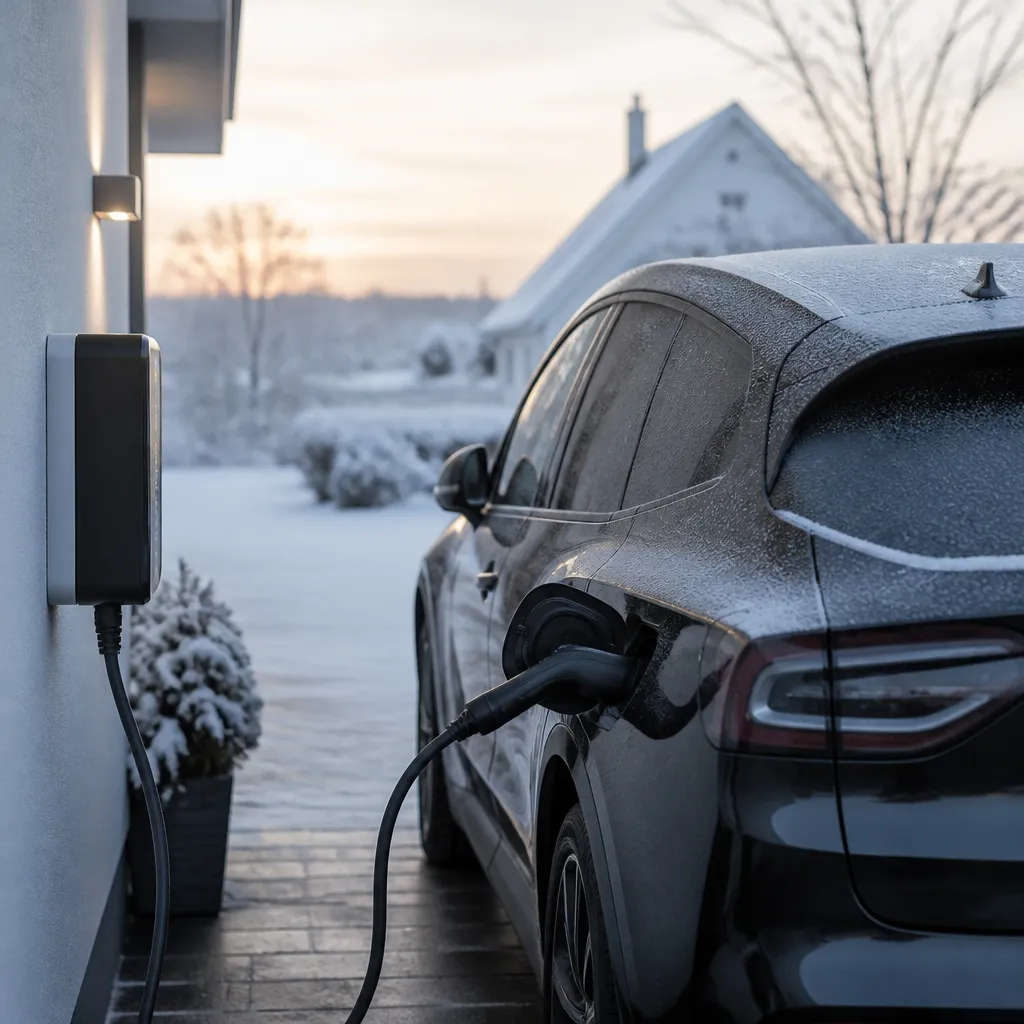
Cold weather reduces usable EV range for reasons that are predictable and largely controllable, yet many drivers in Europe and the UK still face their first freezing morning with a full battery and a dashboard estimate they never questioned. Effective EV winter preparation starts before temperatures fall. It means understanding where the energy goes, scheduling thermal systems while the car is on mains power, and adjusting driving and charging habits to match. This checklist covers the mechanisms behind winter range loss, the steps with the largest measurable effect, and the safety checks that matter on cold, wet, or icy roads.
Table of Contents
- Quick Takeaways
- Why Cold Weather Cuts EV Range
- Preconditioning While Plugged In
- Heating Strategy for Cold Trips
- Tyre Pressure and Traction
- Driving Style and Regenerative Braking
- Cold Weather Charging
- Choosing a Winter Preparation Method
- Frequently Asked Questions
- References
Quick Takeaways
Key Insight
Explanation
Precondition on mains power
Heating the cabin and battery from the grid preserves pack energy for the journey itself.
Use seat and steering wheel heaters first
Localised heating warms occupants directly and is usually far more efficient than heating the full cabin volume.
Set a departure schedule
Timed departures finish conditioning just before you leave, so the battery is warm without a long idle period.
Check cold tyre pressures weekly
Pressure falls as temperature drops, and imbalance affects both energy consumption and grip.
Ease off the accelerator
Aerodynamic drag rises with speed, so a steady lower cruising speed is among the most direct range recoveries available.
Treat the range estimate as optimistic
Winter estimates are less accurate than in ideal conditions, so plan charging stops with a margin.
Why Cold Weather Cuts EV Range
Battery chemistry and thermal management
Cold reduces EV range through two separate mechanisms, and they respond to different countermeasures. The first is battery chemistry. Low temperatures slow the electrochemical reactions inside the cells, which reduces efficiency and limits the energy you can draw and recover. This effect is largely temporary, but driver behaviour cannot eliminate it, only moderate it by keeping the pack close to its optimal operating window.
The second mechanism is energy demand. Cabin heating, defrosting, and battery conditioning all draw from the same pack that propels the car. Cabin heating is usually the largest controllable load, which is why the rest of this checklist focuses on where and when that energy is drawn.
Why the dashboard estimate drifts
Winter estimates are less reliable because the car's projection assumes a consistent efficiency that cold conditions break. Published winter guidance notes that EVs are generally less accurate at estimating range versus ideal conditions. A reading that looks comfortable in October can be optimistic by December, so treat the figure as an upper bound.
Winter range loss is mostly a thermal management problem, and thermal management is mostly a scheduling problem.
Preconditioning While Plugged In
Preconditioning on mains power
Preheating the cabin and battery while the car is still connected means the heating load comes from the grid rather than the pack. The cabin reaches temperature without consuming the range you need for the drive. Efficiency Vermont's cold-weather guidance makes the same recommendation: warm the cabin while plugged in.
The timing matters. A longer preheat completed before you unplug is better than a short one started from the driver's seat, because the pack is still drawing from the charger during conditioning.
Departure scheduling
Many EVs let you set a departure time so that conditioning finishes just before you leave. Set the timer to your first real trip of the day, not a generic pre-dawn default. Check that the car is actually drawing from the mains during the conditioning window, because an early unplug hands the remaining load to the battery.
Pro tip: Leave the charging cable connected until the moment you depart. Unplugging a few minutes early shifts the rest of the conditioning load onto the pack, which is exactly the energy you are trying to protect.
Heating Strategy for Cold Trips
Seat and steering wheel heaters
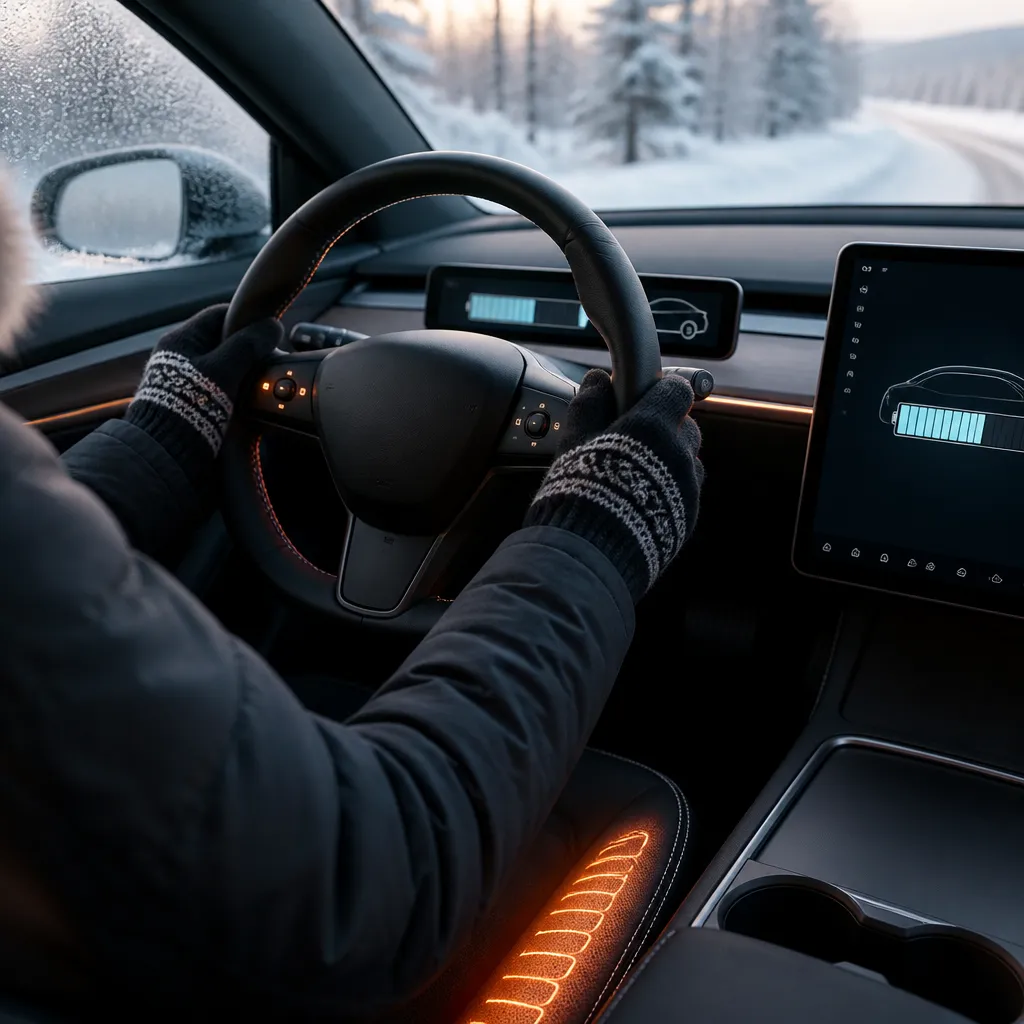
Heated seats and steering wheels warm occupants directly, so they cost far less energy than conditioning the entire cabin air volume. Efficiency Vermont describes them as usually much more efficient than cabin heat. Use them as the first option on any trip where the whole cabin does not need to be fully warm.
On longer journeys, a lap blanket or a warmer jacket reduces the cabin setpoint you need. The principle is the same: every degree you do not have to supply from the battery is range retained.
Heat pumps and cabin setpoints
Vehicles fitted with a heat pump move existing heat rather than generating it from resistance, so they deliver similar cabin warmth with less battery draw. Not every model has one, and the efficiency gain depends on the specific design, so check the specification before assuming it applies to your car. Keep the cabin setpoint modest, and avoid running the defroster at full output for longer than the glass requires.
Tyre Pressure and Traction
Cold-weather tyre pressure
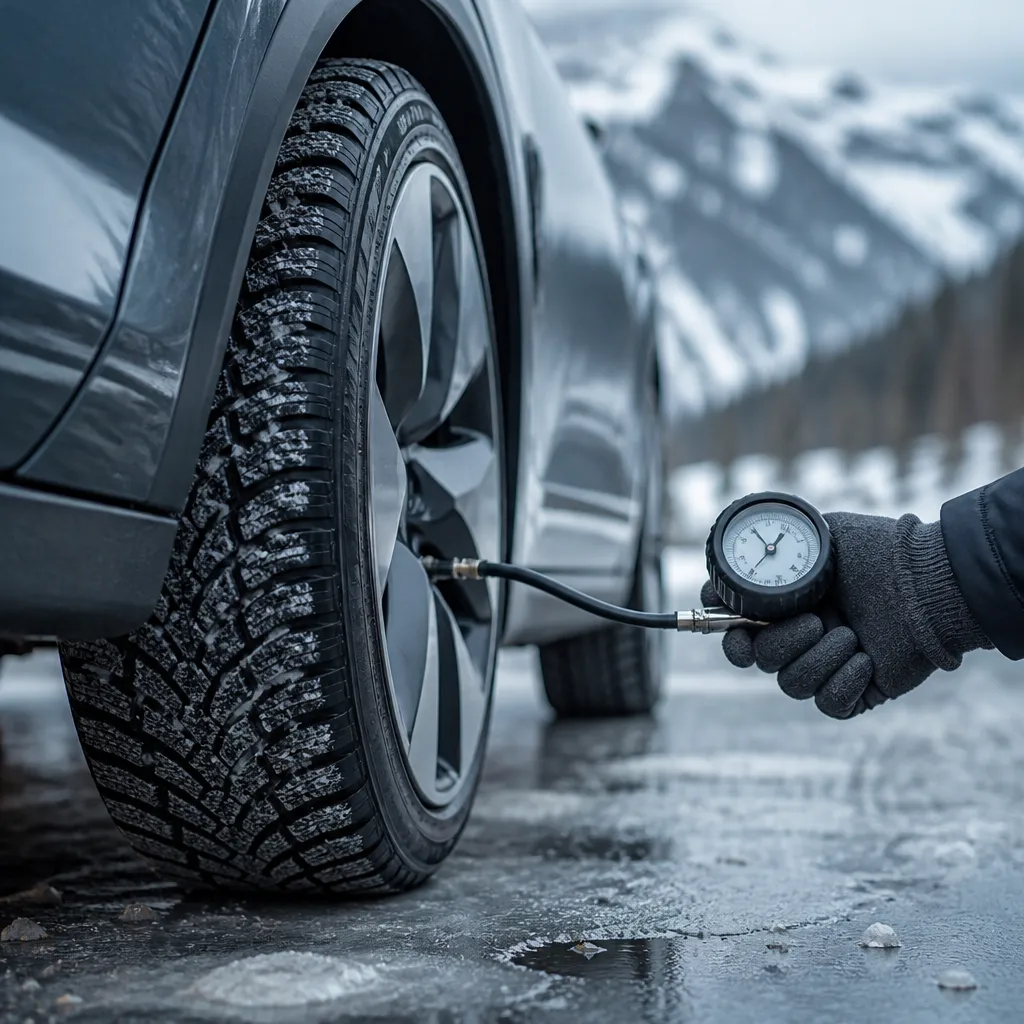
Tyre pressure falls as temperature drops, so a set inflated correctly in summer can run under-inflated by the first cold snap. Euronews notes that any imbalance in tyre pressure can affect energy use, so checks should be regular rather than seasonal. Use the cold pressure on the placard on the driver's door jamb, not the maximum printed on the tyre sidewall.
Under-inflation raises rolling resistance, which costs range, and it also reduces the contact patch that you rely on for grip. Both effects arrive together, which is why pressure checks belong in the winter routine rather than only at service intervals.
Traction, weight, and winter tyres
Battery packs sit low in the floor, giving many EVs a stable centre of gravity. Tesla's winter guidance cites equal weight distribution and dynamic traction control as aids to winter stability. Those systems do not replace tyre choice, because summer compounds stiffen in the cold and lose grip. A dedicated winter set is the most significant safety upgrade for most drivers.
Remove roof racks, cargo boxes, and accumulated snow or ice before driving. Efficiency Vermont notes that these add weight and drag, and both cost range.
Driving Style and Regenerative Braking
Speed as the main aerodynamic lever
Aerodynamic drag rises steeply with speed, and at motorway speeds it dominates consumption regardless of temperature. Efficiency Vermont identifies reducing travel speed as one of the most effective ways to recover range in any conditions. On motorways, a steady lower cruising speed is the most direct adjustment available to you.
Speed is the only one of the main winter levers that scales with every kilometre driven, so it deserves more attention than the cabin heater on long trips.
Anticipation and regeneration
Eco or economy modes reduce motor power and soften throttle response, which suits cold conditions where traction is limited. Anticipating stop lights and easing off as you crest a hill lets regenerative braking recover energy that friction brakes would otherwise waste. Regeneration is limited while the pack is cold, so anticipation needs to start earlier until the battery warms.
Cold Weather Charging
Battery temperature before DC fast charging
Fast charging a cold pack is slower, because freezing conditions slow the chemical reactions that accept charge. Podenergy's cold-weather guide makes the same point about reactions during both charging and discharging. A short warm-up before a rapid stop usually saves more time than it costs.
Many vehicles can precondition the pack automatically when a fast charger is set as the navigation destination. Use that feature where your car supports it, so the battery arrives closer to its charging window.
Planning stops around reduced range
Plan rapid stops with a larger buffer than your summer routine, because both the estimate and the charge rate are less predictable. Shorter stops at moderate states of charge typically make more sense than long top-ups, since charging slows as the pack fills.
Pro tip: Set the fast charger as your navigation destination early in the journey rather than when the battery is low. Preconditioning needs lead time, and a late route change often means arriving with a cold pack.
Choosing a Winter Preparation Method
Ranking the levers by effect
Preconditioning on mains power, seat heating, and speed reduction address different loads and can be combined. Preconditioning removes the cabin warm-up cost from the trip, seat heating reduces the cabin demand you need to meet, and speed control reduces aerodynamic drag. Each lever targets a different part of the energy budget.
Approach
Mechanism
Trade-off
Preconditioning on mains power
Heats the cabin and battery from the grid before departure
Needs a charger connection at departure, so timing must match your schedule
Heated seats and steering wheel
Warms occupants directly, reducing the cabin heating demand
Limited to occupant comfort and does not warm the whole cabin
Reduced cruising speed
Cuts aerodynamic drag, the dominant load at motorway speeds
Longer journey times, so the cost is time rather than comfort
Where the methods trade off
Preconditioning is most useful for daily trips that start from a dependable home or workplace charger. On longer journeys without mains access, seat heating and speed discipline carry most of the load. A common mistake is combining a high cabin setpoint with motorway speeds, then blaming the cold for the shortfall.
Frequently Asked Questions
Does preconditioning drain the battery?
Preconditioning draws from the battery only when the car is not connected to mains power. With a charger connected, the cabin and battery conditioning load is supplied from the grid, so the range you start with is preserved. Some vehicles let you choose whether conditioning uses the grid or the pack, so check that setting.
Are heated seats really more efficient than cabin heat?
In general, yes. Heated seats and steering wheels warm occupants directly rather than the full cabin air volume, which is why Efficiency Vermont's guidance describes them as usually much more efficient than cabin heat.
Should I use eco mode in winter?
Eco mode reduces motor power and softens throttle response, which suits cold conditions where traction is limited. Its benefit is smaller on motorways, where aerodynamic drag dominates and you still need to hold speed.
Do winter tyres matter for an EV?
Yes. EVs are heavy and deliver torque immediately, so grip is often the limiting factor on slippery roads. Summer compounds stiffen in the cold, and a dedicated winter set is the most significant safety upgrade for most drivers.
Why does the range estimate change so much in winter?
The estimate is based on recent consumption, and cold conditions shift consumption abruptly when heating switches on. Published winter guidance notes that EVs are generally less accurate at estimating range than in ideal conditions, so plan with a margin rather than trusting the reading.
Share in the comments which winter step made the biggest difference to your range, or where your car's estimate proved most optimistic.